



Vermouth amaro is a wine-based bitter aperitif that sits between vermouth and amaro. If I want the short answer, this is it: it keeps the wine base of vermouth, adds more bitter herbs like wormwood, gentian and cinchona, and usually lands around 16–20% ABV.
If you’re trying to work out when to buy it, pour it, or swap it into a drink, I’d keep these points in mind:
- Base: fortified wine, not a spirit-led base
- Taste: more bitter and herbal than standard vermouth
- Feel: lighter than amaro, but darker and more structured than vermouth
- Best use: over ice, with soda, in a spritz, or in a Negroni-style serve
- What to check on the label: wine-led wording, bitter botanicals, and 16–20% ABV
- How to store it: keep it in the fridge after opening and drink within 3–4 weeks
- Bottle style examples: our pick is DISPENSE from Asterley Bros, at the darker, more bitter end; among the Italian classics, Cardamaro is lighter, Cocchi Vermouth Amaro sits in the middle, and Punt e Mes is darker and more bitter
What matters most is simple: if I want more bite than sweet vermouth, but I don’t want the weight of amaro, vermouth amaro is the bottle I’d reach for.
Quick comparison
| Drink | Base | Typical ABV | Bitterness | Best use |
|---|---|---|---|---|
| Vermouth | Fortified wine | 14.5–22% | Mild to medium | Martinis, Manhattans, Negronis |
| Vermouth amaro | Fortified wine | 16–20% | Medium-high | Aperitivo serves, spritzes, Negroni swaps |
| Amaro | Spirit-based | 16–35% | High | Neat, after dinner, stirred drinks |
So, if I had to sum up the whole category in one line, I’d say this: vermouth amaro is the middle ground for people who want a drier, more bitter aperitivo without leaving the wine-led style behind.
I meet an Expert - Vermouth (& fortified/aromatised wines) explained!
Where vermouth amaro sits between vermouth and amaro
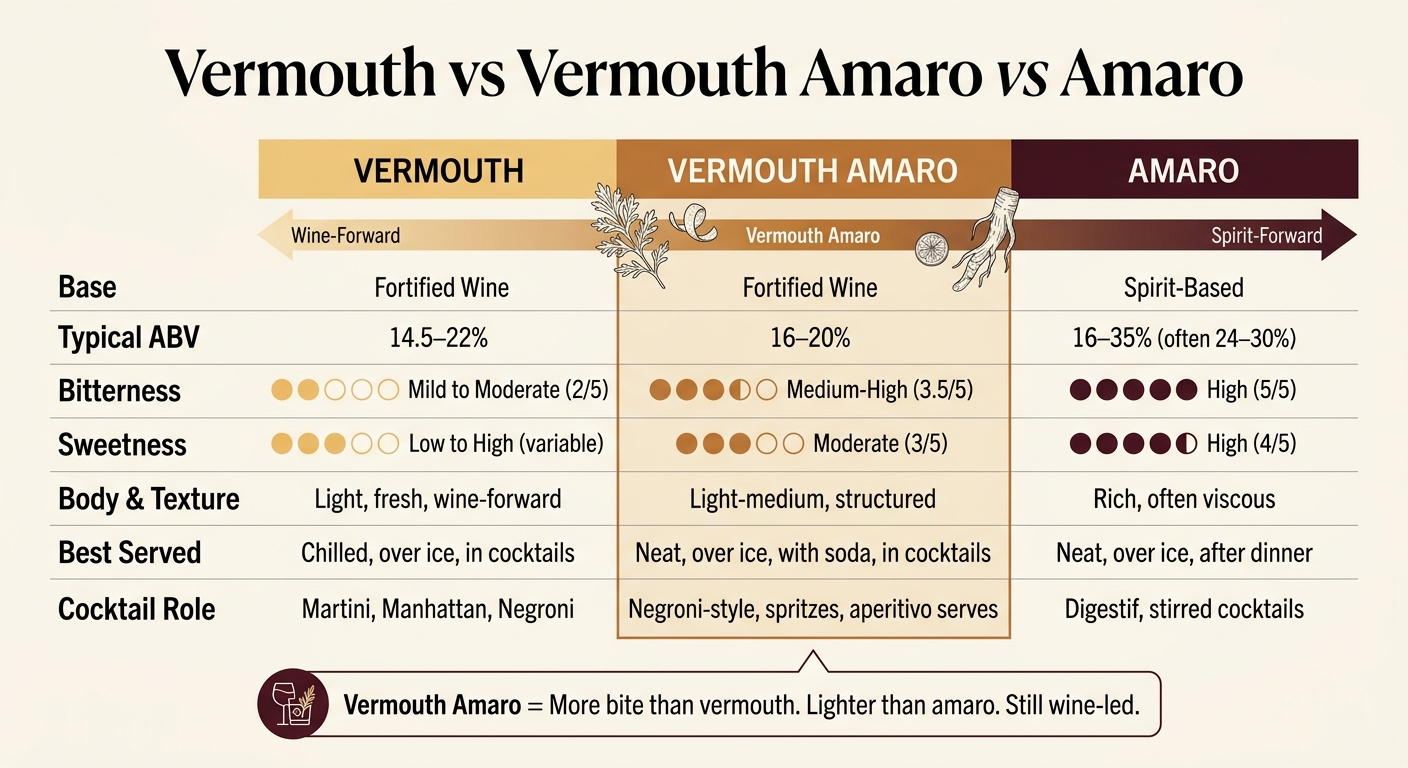
Vermouth vs Vermouth Amaro vs Amaro: Full Comparison Guide
Base, strength and production style
The clearest line between these drinks comes down to the base. Vermouth is a fortified, aromatised wine, so the wine stays front and centre. Amaro is usually made on a spirit base, which gives it a richer, more syrupy feel on the palate.
Vermouth amaro still belongs on the wine-based side. But it leans much further into bitter, herbal flavours than standard vermouth. So while it feels lighter than amaro, it also comes across as fuller and more bitter than standard vermouth.
You notice that shift most in the balance of bitterness, sweetness and texture.
Bitterness, sweetness and botanical profile
Vermouth amaro stands apart because of its bitterness and stronger botanical character. Standard vermouth tends to have moderate bitterness, held in balance by fruit and sweetness. Vermouth amaro turns that dial up, often using gentian and cinchona alongside wormwood to build a darker, firmer profile.
Sweetness usually stays moderate, while bitterness moves into medium-high territory. That gives you a drink with more edge, but one that still feels light enough for pre-dinner drinking.
Common botanicals include:
- Wormwood
- Gentian
- Cinchona
- Citrus peel
- Warming spices
A side-by-side comparison
Placed next to each other, vermouth amaro reads closer to vermouth than to amaro, just with more bite and more structure.
| Vermouth | Vermouth amaro | Amaro | |
|---|---|---|---|
| Base | Fortified wine | Fortified wine | Spirit-based |
| Typical ABV | 14.5–22% ABV | Around 17–18% ABV | 16–35% ABV, often 24–30% |
| Bitterness | Mild to moderate | Medium-high | High |
| Sweetness | Low (dry) to high (rosso) | Moderate | High |
| Body & texture | Light, fresh, wine-forward | Light-medium, structured | Rich, often viscous |
| Best served | Chilled, over ice, in cocktails | Neat, over ice, with soda, in cocktails | Neat, over ice, after dinner |
| Cocktail role | Martini, Manhattan, Negroni | Negroni-style cocktails, spritzes, aperitivo serves | Digestif, stirred cocktails |
That in-between spot is exactly why it works so well in aperitivo serves and cocktails.
How to taste and buy vermouth amaro
What to look for on the label
Once you know the category, the label does a lot of the heavy lifting. It gives you a fast read on how bitter the drink may be, how much the wine shows through, and whether the bottle leans more towards spirit than fortified wine.
Check three things:
- Category wording: terms such as "vermouth amaro", "vino amaro", "aperitivo amaro" or "wine-based bitter" show you’re in the right area. If the label uses wine-led wording and the bottle sits at 16–20% ABV, it’s likely a vermouth amaro.
- ABV: bottles in the 16–20% ABV range are almost always wine-based. If the label puts neutral spirit, brandy or grappa front and centre, you’re probably outside the vermouth amaro category.
- Botanicals: look for bitter botanicals such as gentian, wormwood, cinchona and rhubarb root.
That gives you a quick shortlist before you even pour.
A simple tasting method
Pour about 50 ml into a small wine or sherry glass and serve at 10–14 °C. You can chill it in the fridge or serve it with one or two ice cubes.
A simple way to taste it is to move in three passes: wine first, then herbs, then the dry bitter finish. On the nose, look for grape and dried fruit before the botanicals come through underneath: herbs, citrus peel, roots and spice. On the palate, notice the moderate sweetness at the start, then follow the herbal middle as it builds. A good bottle finishes dry and lingering, not sweet.
The classic Italian style shows deep amber colour, bitter herbs, dried fruit, and a firm wormwood-gentian finish.
Once you know the style in the glass, storage matters more than most people think.
Storage after opening
Re-cork the bottle, keep it in the fridge, and store it away from light. Drink it within 3–4 weeks for the best flavour. Heat and light can dull both flavour and colour quite fast.
With the bottle fresh, you can drink it neat, pour it over ice, or use it in cocktails.
How to drink vermouth amaro
Once you know what style is in the glass, vermouth amaro becomes easy to use. Reach for it when you want more bitterness but still want that wine freshness to stay in place.
Aperitivo serves: neat, on ice and with soda
A simple place to begin is 50 ml over a large ice cube with an orange slice. The large cube melts more slowly, so the drink stays in shape for longer. You get the bitter edge, but the balance doesn’t drift too fast.
It’s also worth trying 50 ml neat and lightly chilled. That makes it easier to taste the wine base and see how the bitter and sweet parts sit together.
If you want a longer pre-dinner serve, go with 50 ml and 75 ml of chilled soda water in a highball glass over ice. The soda opens up the aromatics and takes the sharpness down a notch. Use a strip of lemon zest for brighter, citrus-led styles, and an orange slice for bottles that lean richer and more bitter.
Spritzes with more herbal depth
Vermouth amaro can give a spritz extra bitterness and more herbal depth, while still keeping that wine-led feel. That bitter note helps the drink stay dry and firm instead of turning soft and sweet.
A simple build, using the British red-bitter aperitivo ASTERLEY ORIGINAL:
- 60 ml ASTERLEY ORIGINAL Aperitivo
- 90 ml chilled prosecco or other dry sparkling wine
- 30–60 ml soda water, to taste
- Serve over ice in a large wine glass, garnish with an orange slice or rosemary sprig
Build it over ice, pour in the sparkling wine, top with soda, then stir once.
Negroni-style cocktails and substitutions
Vermouth amaro also fits nicely into stirred drinks. It brings bitterness, but it doesn’t lose the wine base in the way a straight swap with another bitter bottle sometimes can.
The easiest move is to swap out part of the sweet vermouth when you want extra bitterness. Use 25 ml ESTATE Sweet Vermouth with 25 ml vermouth amaro, 25 ml gin, and 25 ml DISPENSE Amaro. You’ll get a drink that’s drier and more herbal than a standard Negroni, while the wine character still sits underneath.
Next, use the bottle examples to match that balance to a given style.
Bottle examples, serving guidance and key takeaways
Bottle examples and style cues
These bottles show the style clearly, moving from lighter aperitivo pours to darker, more bitter cocktail builds.
- DISPENSE (our pick): the modern British amaro from Asterley Bros, 26% ABV, blended with English Pinot Noir and built on gentian, English hops and wormwood. It sits at the darker, more bitter end of the style, for Negroni-style drinks or sipping after dinner.
- Cardamaro: the lightest of the three, with gentle bitterness. It works well in spritzes and simple aperitivo serves.
- Cocchi Vermouth Amaro: more mid-weight, with a firmer bitter edge. A better fit for Negroni-style stirred drinks.
- Punt e Mes: the darkest and most bitter. Best used when you want to swap part of the sweet vermouth or even part of the bitter element in bitter cocktails.
You can see the same kind of spectrum in the Asterley Bros range.
How to explore the style with Asterley Bros
ESTATE English Vermouth leans more towards vermouth, but still has deep herbal character. It’s built on English Pinot Noir from Gusbourne in Kent.
DISPENSE Modern British Amaro at 26% ABV pushes further into bitter territory. It uses that same wine base, then layers in amaro-style bitterness from gentian, hops and wormwood. That makes it a clear example of this hybrid category at the darker, more bitter end.
The main points to remember
Vermouth amaro sits in the middle ground between vermouth and amaro. Reach for it when you want more bitterness, more herbal depth, and a drier finish in aperitivo serves or mixed drinks.
A quick label check can tell you a lot. Look for:
- a stated wine base
- mid-range ABV
- mention of classic bittering botanicals
When those three cues show up together, there’s a good chance the bottle belongs in this hybrid space.
FAQs
Is vermouth amaro sweet or dry?
Vermouth amaro is neither strictly sweet nor dry. It sits in the middle as a hybrid style, balancing sweetness with bitterness.
It blends vermouth’s fortified wine base with amaro’s bitter botanicals, which gives it a bittersweet, herbaceous character instead of pushing it to either end of the spectrum.
Can I use vermouth amaro instead of sweet vermouth?
Yes: you can use vermouth amaro instead of sweet vermouth if you want a drink with more bitterness and a deeper herbal edge.
Because it sits somewhere between vermouth and amaro, it’s often bolder than standard sweet vermouth. That means you may need to tweak the balance a bit. You can use it on its own, or mix it with sweet vermouth, in drinks like a Negroni or a spritz.
How do I know if a bottle is a vermouth amaro?
A vermouth amaro sits in the middle of sweet vermouth and amaro. In plain terms, it blends a fortified wine base and wormwood bitterness with the deeper, darker bitterness you’d expect from a liqueur.
Most bottles in this style have a richer, more layered herbal finish than a standard vermouth. If the label points to a balance of sweetness and bitterness, or plainly says it’s a blend of the two, you’re probably looking at the right thing.