



Vermouth is taking centre stage in 2026 as a refined, lower-alcohol alternative to gin. With an ABV of 15–22%, its botanical complexity and versatility align with the growing trend of mindful drinking. Vermouth sales have surged, reflecting its rising popularity in aperitivo culture. Here’s why it’s replacing gin as the drink of choice:
- Low-ABV Appeal: Vermouth offers rich flavours without the high alcohol content of gin, making it ideal for lighter, pre-dinner drinks.
- Botanical Depth: Made from fortified wine infused with herbs, spices, and bitter agents like wormwood, it delivers a nuanced taste.
- Styles for Every Palate: Dry, sweet (rosso), and bianco vermouths cater to a range of preferences and cocktail recipes.
- Changing Habits: Nearly half of UK adults now choose low- and no-alcohol options, favouring earlier, relaxed social gatherings.
Vermouth’s versatility shines in cocktails like spritzes, Negronis, and highballs, or simply served over ice with an orange slice and olive. Proper storage is key: refrigerate after opening and consume within a month for the best experience.
This shift marks a new era in drinking, where flavour, balance, and moderation come together. Whether at home or in bars, vermouth is redefining aperitivo rituals in 2026.
What is Vermouth? How to Drink it, Best Vermouth Cocktails, and Tasting the First Argentine Vermouth
What Is Vermouth? A Botanical Spirit Explained
Vermouth isn’t a spirit: it’s actually a fortified, aromatised wine. It begins with a neutral white wine base, often made from grapes like Trebbiano, Catarratto, or Piquepoul. This wine is then fortified with a neutral spirit, usually grape-based, to boost its alcohol content and help with preservation. What makes vermouth truly stand out is its infusion of botanicals. Herbs, spices, flowers, and roots are either steeped in the wine for up to 45 days or their flavours are drawn out by passing the wine through botanical baskets.
The key ingredient in vermouth is wormwood (Artemisia), which gives it its distinctive bitter flavour. In many regions, wormwood is a requirement for a product to be classified as vermouth. Alongside wormwood, other common ingredients include gentian, cinchona, citrus peel, cardamom, coriander, and chamomile. Once the botanical flavours are infused, sugar or caramelised sugar is added (especially in sweet and bianco styles) to balance the bitterness. The result? A complex, herbal drink with floral and bitter notes, typically sitting between 13% and 22% ABV. This intricate process allows for a variety of styles to suit different tastes.
As Madeline Maldonado, Beverage Director at José Andrés' Mercado Little Spain, aptly describes it:
"Vermouth is the best of both worlds for me as a wine person."
Main Styles of Vermouth
Vermouth comes in three primary styles, each with its own flavour profile and uses:
- Dry vermouth (or extra dry): Known for its crisp, herbal, and citrusy character with a slight saline touch. It contains less than 50g/l of sugar, making it a go-to for Martinis and seafood pairings.
- Sweet vermouth (rosso): This style is amber to deep red, with rich notes of vanilla, caramel, dark chocolate, and bitter orange. With 90–130g/l of sugar, it’s a key ingredient in cocktails like the Negroni and Manhattan.
- Bianco (or blanc) vermouth: Striking a middle ground, it uses a white wine base like dry vermouth but has a sugar content closer to the sweet variety. It offers a floral, sweet-white flavour with hints of elderflower and stone fruit, making it perfect for spritzes or sipping with soda.
Vermouth vs Gin: Key Differences
Though both are celebrated for their botanical blends, vermouth and gin are fundamentally different. Gin is a distilled spirit with a higher alcohol content, typically between 37.5% and 47% ABV, and its defining flavour comes from juniper. Vermouth, on the other hand, is a fortified wine with a lower ABV (13%–22%) and relies on wormwood or gentian for its bitterness rather than juniper.
While they share some botanicals, like citrus peel, cardamom, and coriander, vermouth’s wine base gives it a layered, vinous character that complements gin in cocktails such as the Martini. Unlike gin, vermouth is perishable once opened. It should be stored in the fridge and consumed within one to three months to maintain its quality and avoid oxidation.
Low-ABV Drinking in 2026: Current Trends
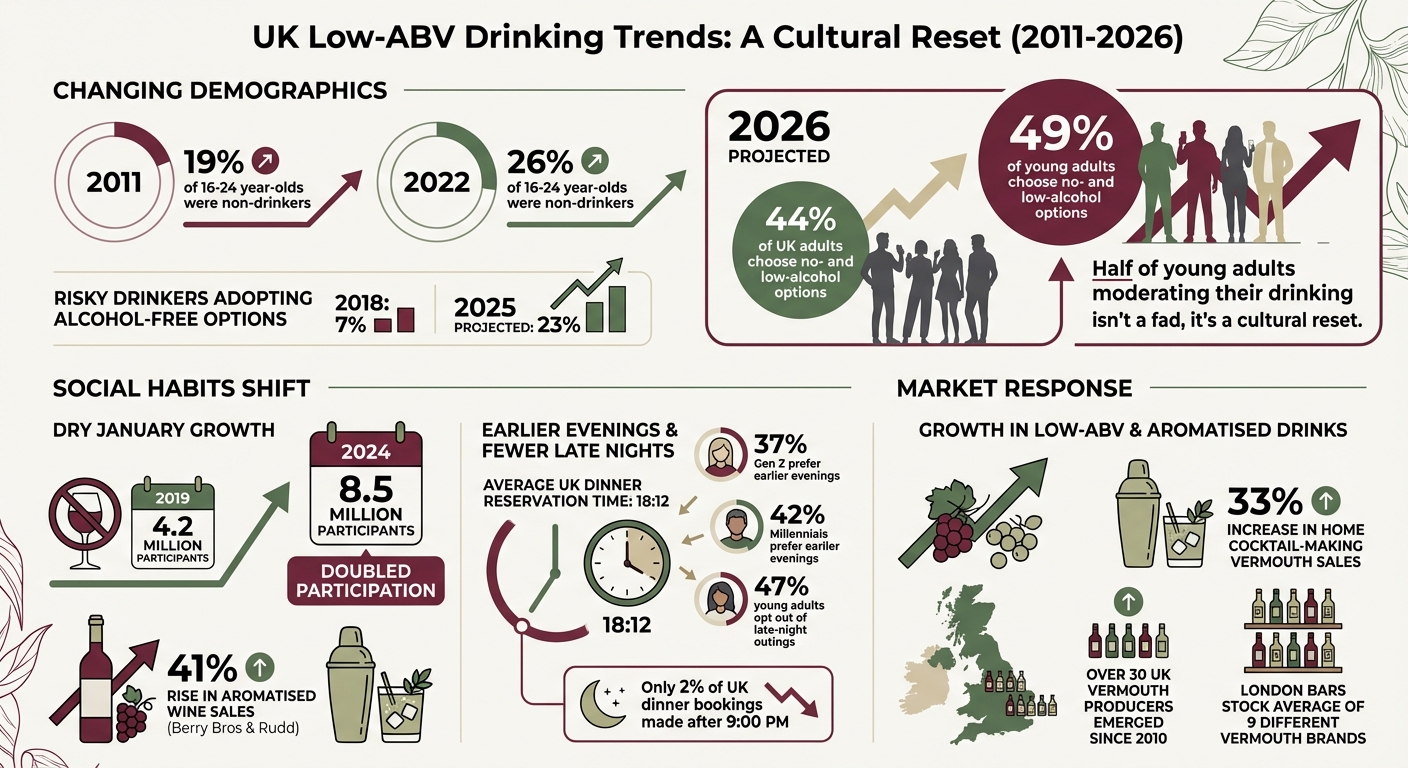
UK Low-ABV Drinking Trends 2011-2026: Statistics and Consumer Behaviour Shifts
The way people in the UK socialise has seen a noticeable transformation over recent years. Back in 2011, 19% of 16–24-year-olds in the UK were non-drinkers. Fast forward to 2022, and that number had climbed to 26%. By 2026, nearly half of UK adults (44%) are choosing no- and low-alcohol options to moderate their drinking. Among young adults, this figure is even higher, hitting 49%. It’s not about giving up alcohol entirely: it’s about making intentional choices.
Laura Willoughby, CEO and founder of Club Soda Drinks, reflects on this shift:
"Half of young adults moderating their drinking isn't a fad, it's a cultural reset. The old idea that you need alcohol to have a good time is collapsing."
The popularity of Dry January is a testament to this change. Participation more than doubled between 2019 and 2024, growing from 4.2 million to 8.5 million people. Similarly, the adoption of alcohol-free drinks among "risky drinkers" (those consuming over 14 units per week) rose sharply, jumping from 7% in 2018 to 23% by 2025. This shift highlights a move towards drinking less but better, focusing on quality over quantity.
Why Low-ABV Spirits Are Gaining Popularity
Health concerns are a key motivator, but there’s more to this trend than just wellness. Social habits are changing too. Among Gen Z, 37% now prefer earlier evenings, while 42% of millennials report the same. Nightclub visits are also less frequent, with 47% of young adults opting out of late-night outings. Dinner reservations in the UK now average at 18:12, with only 2% of bookings made after 9:00 PM. This has given rise to the "daycap": cocktails enjoyed straight after work instead of late into the night.
This cultural shift favours more relaxed, refined gatherings over wild nights out. Drinks with bitter and savoury profiles, such as vermouth, amaro, and botanical spirits, are gaining ground. The Spritz, a light cocktail built around spirit aperitifs like vermouth (which typically ranges from 15% to 22% ABV), has become the top choice for Gen Z in 2026.
Vermouth, in particular, fits this trend perfectly. Served as a long drink with tonic or soda, it offers a lighter alternative for a relaxed evening. Charlie McCarthy, Business Development Manager at WSET, highlights its appeal:
"Vermouth delivers amazing aromatic complexity for a relatively low alcohol content."
Why Vermouth Works as an Aperitivo
As mindful drinking gains traction in the UK, vermouth has emerged as a go-to choice for aperitivo rituals steeped in sophistication. Rooted in European tradition, vermouth has found a growing fan base in the UK, with over 30 local producers emerging since 2010. Berry Bros & Rudd reported a 41% rise in sales of aromatised wine, as vermouth moved from niche to mainstream.
Its bittersweet complexity makes vermouth a natural fit for aperitivo culture. Light enough for extended socialising, it is traditionally served before a meal, staying true to the original purpose of an aperitivo. Bobby Hiddleston, co-founder of Swift, notes:
"Consumers are a lot more aware of what they are putting in their bodies, including alcohol, and with vermouth having a naturally lower ABV than spirits, they are being drawn towards it."
Vermouth’s versatility makes it suitable for all kinds of occasions. It can be enjoyed neat over ice, mixed with tonic or soda for a refreshing highball, or as the base for a spritz. This aligns with the Spanish tradition of "La Hora del Vermut", a time to pause for a small bite and a drink before a meal. Reflecting this growing demand, London bars now stock an average of nine different vermouth brands, while sales for home cocktail-making have risen by about 33% in recent years.
Emily Neill, Chief Operating Officer Research and Operations at IWSR, captures the broader appeal:
"The spritz occasion chimes with lighter, all-day drinking occasions, and this has been the principal driver for the expansion of the sparkling wine category."
At the heart of this movement, vermouth offers the perfect balance of depth and sophistication, redefining what it means to drink well in a generation that values mindful choices.
How to Enjoy Vermouth in Aperitivo Rituals
The charm of vermouth lies in its straightforwardness. You don’t need fancy techniques or a deep understanding of mixology to enjoy it. Whether you’re hosting a casual gathering at home or unwinding after a long day, vermouth fits seamlessly into the moment. With just a few simple steps, you can bring out its rich flavours and create the perfect aperitivo experience.
Serving Vermouth: Methods and Tips
To truly appreciate vermouth, serving it at the right temperature is key. White, amber, and rosé vermouths should be chilled to 12°C–14°C, while red vermouth is best served slightly warmer at around 16°C. For a classic Spanish twist, pour chilled vermouth over ice, then garnish with an orange slice and a green olive. This pairing of citrus and brine enhances the drink’s botanical notes and adds a subtle, savoury balance.
If you’re after a lighter drink, mix one part vermouth with two parts tonic or soda water. This creates a refreshing, lower-alcohol option that’s ideal for long, relaxed conversations. Prefer something with a bit more kick? Try a lighter Martini by using a 2:1 or 3:1 ratio of vermouth to gin (for example, 60 ml of vermouth paired with 30 ml of gin).
Asterley Bros' SCHOFIELD'S (dry) and ESTATE (sweet) English vermouths are standout choices for any of these serves. Their rich botanical profiles make them equally enjoyable on their own or as the star ingredient in a cocktail. Once poured, vermouth’s versatility invites you to complete the experience with perfectly chosen food pairings.
Food Pairings for Vermouth
Pairing vermouth with the right small bites can elevate your aperitivo ritual. Salty snacks like olives, salted almonds, and crisps are classic choices, as their briny flavours cut through vermouth’s herbal complexity. If you’re looking for something heartier, charcuterie, croquetas, or tinned fish are excellent options, complementing vermouth’s bittersweet, herbal character.
The style of vermouth you choose can guide your food pairings. Sweet red vermouth pairs wonderfully with dark chocolate or rich charcuterie, while dry white vermouth shines alongside fresh seafood or goat cheese. Blanc vermouth, known for its floral and spicy notes, pairs beautifully with artisanal hard cheeses and nuts.
As Pablo Schor, Bar Manager at Restaurant Beba, aptly puts it:
"Guests light up when they see vermouth and olives on our menu. It taps into nostalgia and also feels fresh".
Low-ABV Vermouth Cocktail Recipes
Dive into the world of vermouth with these creative cocktail recipes. Each one showcases vermouth's botanical richness while keeping the alcohol content on the lighter side.
Asterley Bros English Negroni
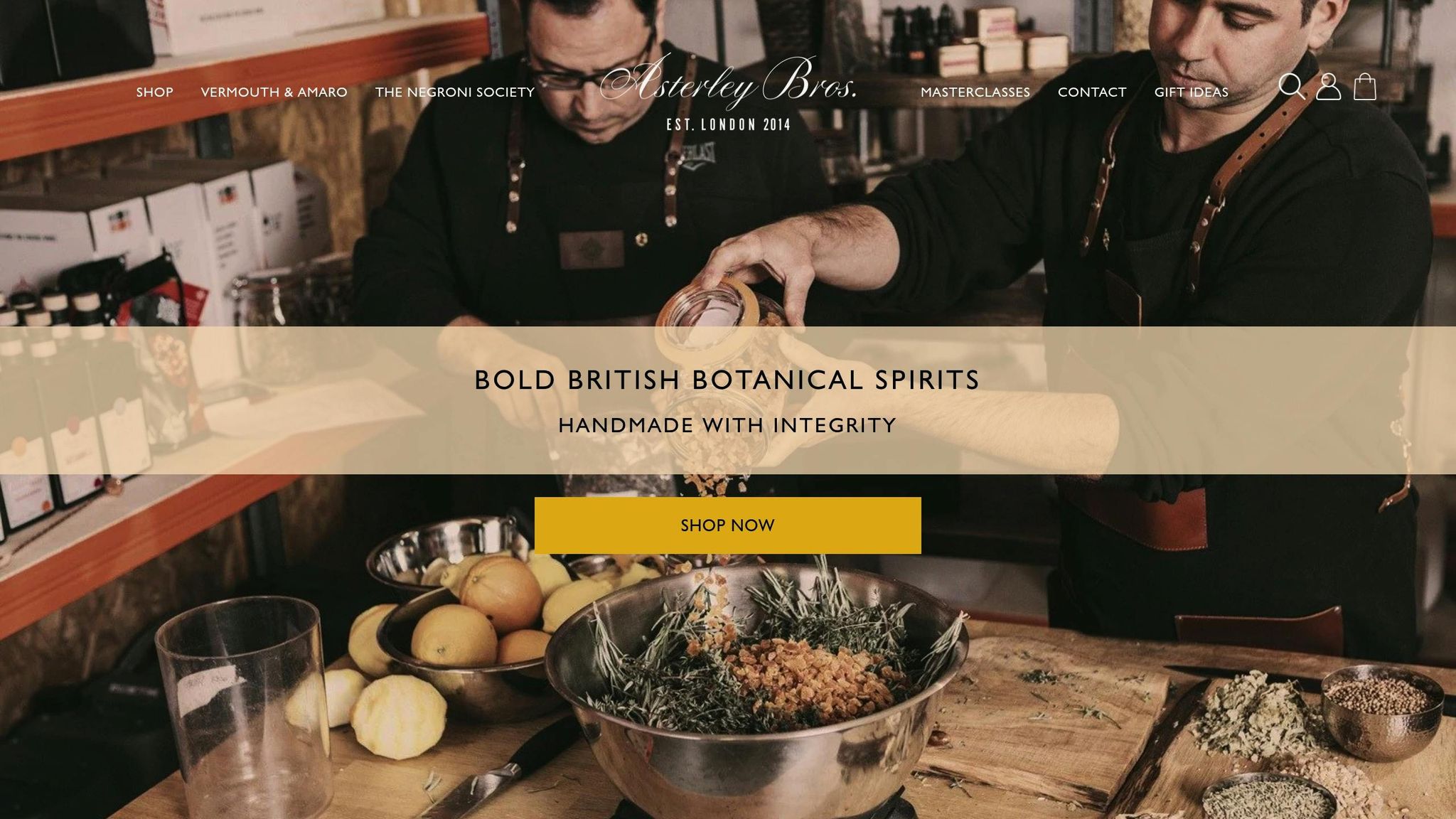
This British take on the classic Negroni swaps out gin for BRITANNICA London Fernet, resulting in a drink that's both layered and easy to enjoy. To make it, combine:
- 30 ml of ESTATE Sweet Vermouth (£26.95)
- 30 ml of BRITANNICA London Fernet (£38.95)
- 30 ml of ASTERLEY ORIGINAL British Aperitivo (£20.95)
Pour the ingredients into a mixing glass filled with ice. Stir for 20–30 seconds to properly chill and dilute the drink, then strain it into a rocks glass over fresh ice. Garnish with an orange twist to release its fragrant citrus oils.
Remember: always stir (never shake) to maintain the drink's clarity and smooth texture. Since vermouth is an aromatised wine, refrigerate it after opening and use it within a few weeks to preserve its flavour. This cocktail strikes a balance between mindful drinking and bold flavours.
Vermouth Spritz
If you're after something lighter, the Vermouth Spritz is an excellent choice. Combine the following in a wine glass over ice:
- 60 ml of SCHOFIELD'S English Dry Vermouth (£26.95)
- 60 ml of prosecco
- 30 ml of soda water
Give the drink a gentle stir to keep the bubbles intact. Garnish with an orange slice and a green olive for a nod to the Spanish "vermut" tradition. With an alcohol content of around 8–10% ABV, this refreshing spritz is perfect for leisurely aperitivo hours.
Amaro-Vermouth Highball
For a herbal and bittersweet option, try this modern highball. Combine:
- 45 ml of DISPENSE Modern British Amaro (£31.95)
- 30 ml of ESTATE Sweet Vermouth
Pour the mixture over ice and top with 90 ml of tonic water. Garnish with a lemon slice to highlight the drink's herbal complexity. As Paul Clarke aptly puts it:
"Spirits such as whiskey or gin pack a flavorful punch in cocktails, but sometimes you're looking for a drink that doesn't have quite the boozy wallop, yet still doesn't skimp on flavor."
This highball delivers a refreshing and nuanced experience, perfect for those who want all the flavour without the intensity.
Tips for Getting the Most from Vermouth
How to Store Vermouth Properly
Vermouth, a fortified wine infused with botanicals, starts to oxidise once opened, unlike distilled spirits. To keep it tasting its best, refrigeration is a must. Neal Bodenheimer, Managing Partner at Cure, emphasises this point:
"That old bottle is spoiled! Treat [open] vermouth like wine and keep it in the fridge, because in essence, it is!"
When refrigerated, an opened bottle of vermouth can stay fresh for up to a month. To further preserve its quality, minimise its exposure to air. Always recap the bottle immediately after use, or better yet, use a vacuum sealer to remove oxygen. For those who buy larger bottles, transferring the remaining liquid into a smaller, airtight container can help. If you’re not a frequent vermouth drinker, consider opting for 375ml or 500ml bottles (SCHOFIELD'S and ESTATE come in 500ml) instead of the standard 750ml to ensure you finish it while it’s still fresh.
Unopened bottles, on the other hand, can last three to four years if stored in a cool, dark place, away from light and heat. Always check the "best by" date before purchasing to ensure you’re getting the best quality.
If you love vermouth but worry about waste, there are convenient alternatives to explore.
The Asterley Bros Negroni Society Subscription
For those who want to enjoy vermouth without the hassle of storage or potential waste, the Asterley Bros Negroni Society subscription is a fantastic option. At £14.50 a month plus postage, members receive a new Negroni recipe every month, crafted by the best bars and bartenders, with two Negronis in each delivery. This subscription not only showcases vermouth’s versatility but also eliminates the need to buy full bottles that might spoil before you finish them.
Learning Through Vermouth Masterclasses
For a deeper dive into the world of vermouth, the Asterley Bros Welcome to Vermouth masterclass (£59.50) offers a hands-on experience at their South London production space. You taste the full range with aperitivo cocktails and nibbles, go behind the scenes, and take home a bottle of English vermouth. Whether you’re just starting out or already a vermouth enthusiast, it can help you appreciate vermouth as more than just a cocktail ingredient: it’s a drink worth celebrating in its own right.
Conclusion: Vermouth's Future in Low-ABV Drinking
In 2026, vermouth is at the forefront of the low-ABV movement, offering a perfect balance of botanical complexity, versatility, and aromatic richness at just half the alcohol strength of gin. With an ABV ranging from 15–18%, compared to gin's 37.5–40%, vermouth fits seamlessly into the growing trend of mindful drinking and the preference for "quality over quantity".
Jonny Forsyth, Senior Director at Mintel Food & Drink, highlights vermouth’s potential:
"Vermouth has all of gin's advantages and more, but is less widely known, understood and appreciated. This is likely to change... as early-adopters seek to move on from 'peak gin'."
This shift is further supported by market trends, which reveal a growing consumer interest in vermouth. Its unique wine-based terroir, distinctive wormwood bitterness, and ability to elevate cocktails make it a standout choice in today’s era of refined and mindful drinking.
Asterley Bros' handcrafted English vermouths, SCHOFIELD'S and ESTATE, perfectly capture this botanical richness, offering the depth and versatility that modern aperitivo culture demands. Whether enjoyed neat over ice, in a refreshing Vermouth Spritz, or as part of the Negroni Society subscription (£14.50 a month plus postage), vermouth invites drinkers to embrace a world of flavour, ritual, and balance. Properly stored in the fridge and approached with a sense of curiosity, vermouth transforms from a supporting ingredient into the star of your drinks collection. Its rise as the quintessential aperitivo drink cements its place at the heart of modern British drinking culture in 2026.
FAQs
What’s the best way to store vermouth to keep it fresh?
To keep your vermouth in top condition, store unopened bottles in a cool, dark spot, away from direct sunlight or heat sources. After opening, make sure the bottle is tightly sealed and placed in the fridge. This helps maintain its flavour and aroma, allowing it to stay fresh for several weeks.
Why is vermouth becoming a popular choice for lower-alcohol cocktails?
Vermouth is becoming a favourite ingredient in lower-alcohol cocktails, thanks to its distinctive mix of fortified wine (usually 15–19% ABV) and an array of botanicals like herbs, spices, and citrus peel. Compared to stronger spirits like gin or whisky, vermouth brings depth and complexity to drinks without significantly boosting their alcohol content. This makes it a perfect match for the growing aperitivo culture, which celebrates lighter, lower-strength drinks.
What sets vermouth apart is its botanical richness, offering a harmonious blend of herbal, bitter, and occasionally sweet notes. This balance creates cocktails with a layered yet approachable flavour. Whether enjoyed simply over ice or in more creative concoctions like the El Presidente, vermouth’s versatility is undeniable. With its roots in European aperitif traditions and a lower alcohol profile, it’s the perfect choice for crafting refined, refreshing drinks that align with the modern preference for slower, more mindful sipping.
What makes vermouth different from gin in terms of flavour and ingredients?
Vermouth is a fortified wine that's been sweetened and infused with wormwood, along with a mix of botanicals. This process gives it a bitter-sweet and herbal flavour that’s quite distinct. Gin, on the other hand, is a distilled spirit made from a neutral alcohol base and flavoured primarily with juniper berries, which lend it a crisp, pine-like taste. Often, additional botanicals are used to enhance its flavour.
While gin is celebrated for its sharp, refreshing profile, vermouth brings a richer, wine-based complexity, making it a popular choice for lower-alcohol aperitivo drinks and cocktails.