



English vermouth is no longer a fringe bottle. I’d sum it up like this: Britain’s aperitif scene is growing because people want lower-ABV drinks, bars are serving more early-evening spritzes and classics, and English makers now offer bottles with a clear sense of place, flavour, and craft.
In simple terms, this article shows why the category has moved so fast. In 2010, there was one English vermouth producer. By 2026, there are 30+. At the same time, the main hospitality drinking window has shifted to 5–7 p.m., 39% of UK adults aged 18 to 24 do not drink alcohol, and spritzes now make up about 45% of cocktail sales at some major pub chains. Put those shifts together, and vermouth starts to make a lot of sense.
Here’s the short version:
- What it is: an aromatised, fortified wine with wormwood at its core
- Why it’s growing: lower-ABV drinking, earlier social occasions, and more interest in what goes into classic cocktails
- What sets English bottles apart: botanicals such as rosemary, rhubarb, elderflower, lavender, and rose
- Why bars like it: it works in a Negroni, Martini, Spritz, or just with soda over ice
- Why drinkers like it: it feels more suited to slow, social drinking than heavier serves
- Who to know: producers such as Asterley Bros, plus other English makers using local wine and botanicals
I’d say the main point is simple: English vermouth fits how Britain drinks now. It gives bartenders an easy aperitivo serve, and it gives drinkers a lighter option that still feels grown-up and full of flavour.
The forces driving English vermouth's rise
Shifting drinking habits and lower-ABV occasions
The main drinking window in hospitality has moved earlier, from 7–10 p.m. to 5–7 p.m., while late-night venues have dropped by around 29% since March 2020. That change has nudged demand towards lower-ABV drinks served earlier in the evening.
A vermouth and soda fits that moment neatly. It can halve the ABV of a standard gin and tonic, which makes it a smart pick for people who want a drink that still feels satisfying, just not as heavy. In plain terms, it suits the kind of serve that feels generous without tipping into too much, too soon.
Premiumisation, provenance and small-batch appeal
Premiumisation is also steering drinkers towards bottles with a clear sense of place and craft. English vermouth meets that demand with local botanicals, domestic base wines and small-batch production methods.
That timing matters. Premium vermouth sales are up 24%–47% across styles, which helps English bottles claim more room on drinks lists. For buyers and drinkers alike, a bottle with a strong British point of difference is often easier to back.
Bar culture and the return of bitter-sweet classics
Vermouth is no longer stuck in the background of drinks like the Negroni and Martini. Bars are now pouring it by the glass and treating it as a drink in its own right. That says a lot about where tastes are heading.
Bitter-sweet serves are landing well with drinkers, and English vermouth sits neatly in that space. Spritzes account for roughly 45% of cocktail sales at major UK pub chains such as Greene King and Young's, which shows just how firmly aperitif drinking has moved into the mainstream.
As classic serves stay in focus, the vermouth itself matters more. Flavour, structure and serving style start to do more of the heavy lifting.
What gives English vermouth its character
British botanicals, seasonality and flavour
English vermouth has a character of its own, and a lot of that comes down to the botanicals and the finish. Italian styles often lean on Mediterranean spices, vanilla and citrus peel. English vermouth goes in a different direction, turning to hedgerow and garden botanicals for a brighter, drier finish. Lower sugar and sharper acidity help keep it crisp instead of weighty.
That botanical identity is helping power Britain’s aperitif boom. People want drinks that feel tied to a place, not just another bottle on the back bar. English vermouth fits that mood well. Some makers take the local angle even further, with:
- Foraged conifers such as Douglas fir and Scots pine
- English-grown wormwood
- Hedgerow plants gathered around a maker's own vineyard
Seasonal sourcing matters just as much as the ingredient list. A vermouth made with plants picked at different points in the year can shift in small but noticeable ways, which is part of the appeal.
Small-batch production and a craft spirits approach
English vermouth also takes cues from craft gin. Many producers work in small batches, pay close attention to botanical extraction, and blend by hand. That smaller-scale approach gives makers room to respond to seasonal ingredients and the character of the base wine, so each bottle can feel more tied to its source.
Some producers go a step further and fortify with barrel-aged apple brandy instead of neutral spirit. That brings extra fruit and a layer of oak-aged depth. It’s a big part of why English vermouth feels current, premium and easy for bars to work with, rather than like a one-note mixer.
Why English vermouth works across modern serves
English vermouth tends to do a lot with balance. The mix of acidity, aroma and lower sugar means it works neatly over ice, in a Martini, or in a brighter Negroni. You get lift, shape and a cleaner finish, which is why these bottles are showing up in both simple serves and classic mixed drinks.
English vermouth producers and serves worth knowing
Asterley Bros and the modern British aperitif house
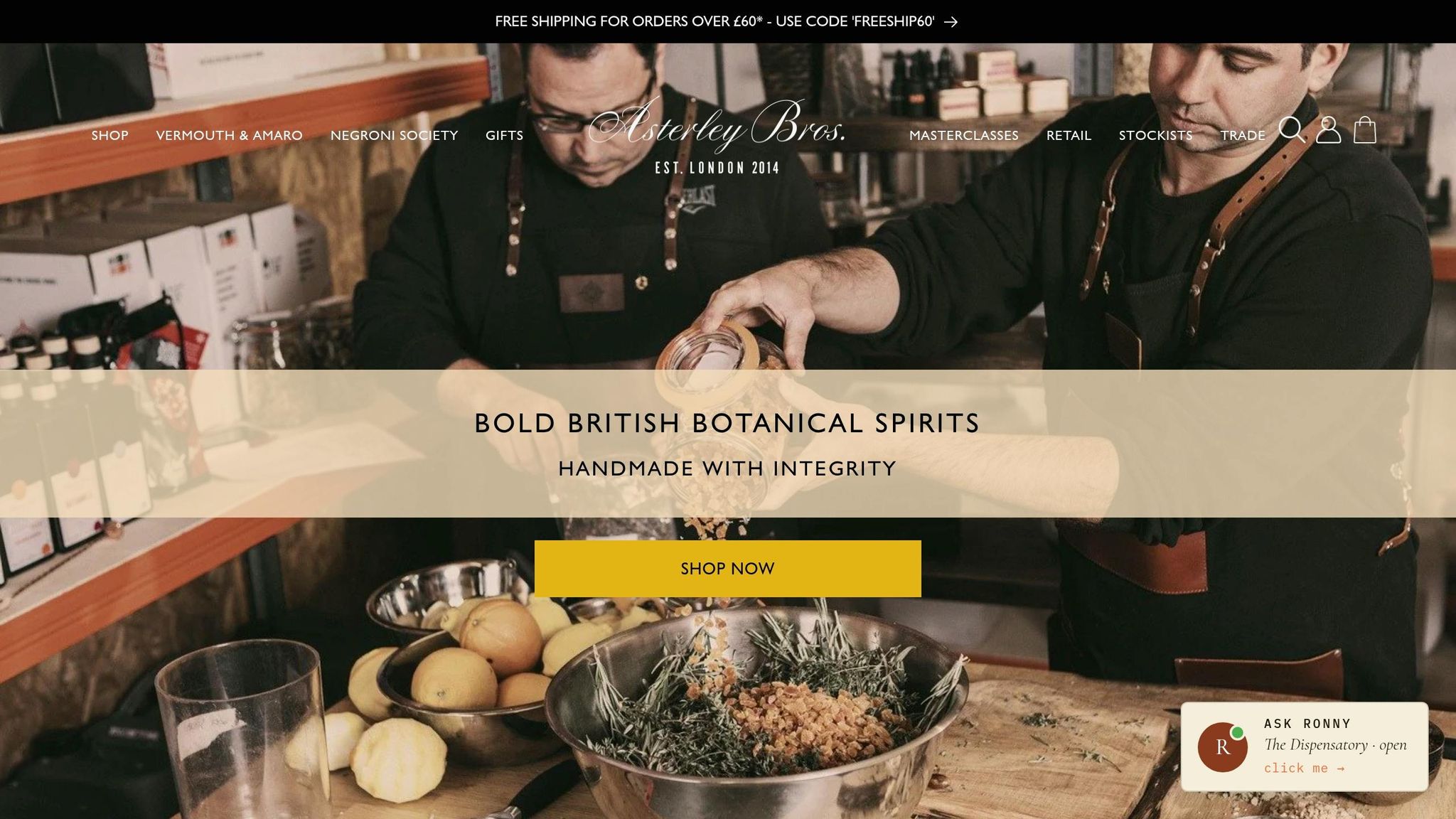
That change is now easy to spot on the back bar.
Asterley Bros, founded in 2014 by brothers Rob and Jim Berry, produces small-batch vermouth and amaro in South London, and its DISPENSE amaro nods to Nicholas Culpeper's 1653 London Dispensatory.
ESTATE Sweet Vermouth starts with an English Pinot Noir base and is made with 34 botanicals. SCHOFIELD'S Dry Vermouth uses a blend of English white wines for a drier, more aromatic finish. Both have fruit, scent and balance. The range suits early-evening drinking just as well as cocktails.
The company also runs masterclasses at its South London production space.
Other English producers shaping the category
Asterley Bros is part of a broader shift towards British aperitif drinks made with local botanicals, drier profiles and food-led serves.
How to serve English vermouth: Negroni, Martini and Spritz
Those flavour profiles fit neatly into the Negroni, Martini and Spritz.
| Serve | Ingredients | Asterley Bros product |
|---|---|---|
| Negroni | 30 ml gin, 30 ml sweet vermouth, 30 ml amaro | ESTATE Sweet Vermouth & DISPENSE Amaro |
| Martini | 60 ml gin or vodka, 15 ml dry vermouth | SCHOFIELD'S Dry Vermouth |
| Spritz | 50 ml aperitivo, 75 ml Prosecco, 25 ml soda | ASTERLEY ORIGINAL British Aperitivo |
Keep opened vermouth in the fridge.
What the boom means for drinkers and bartenders
What consumers gain from better British options
This shift matters because it changes what people can buy, pour and enjoy at home. For drinkers, the upside is simple: clearer provenance, a stronger premium shelf, and a bottle that fits easily into home drinking.
Asterley Bros ESTATE Sweet Vermouth, for example, brings a named wine base and a botanical story that gives people something more to talk about when they open the bottle. It doesn’t just sit on the shelf looking smart. It gives drinkers a sense of where it comes from and how it was made.
It also suits the way many people drink now. A vermouth and soda is a lower-ABV serve that still feels grown-up and occasion-led, rather than like a compromise.
The same pull carries over into bars, where vermouth now has a much clearer role on the menu.
How bartenders are using English vermouth today
Behind the bar, vermouth is moving from a background ingredient to a menu line in its own right. That makes aperitivo serves an easy match for early-evening trade, when people want something light, social and a bit more polished than the usual pour.
For bars, a good vermouth serve can do a lot with very little fuss. It offers strong margins and a clean aperitivo option. And listing a premium English dry vermouth such as SCHOFIELD'S as a Martini upgrade is one of the simplest ways to add a local point of view without changing much else on the menu.
That matters because bartenders don’t always need to reinvent the wheel. Sometimes the smart move is a small change that gives guests a better story in the glass.
Conclusion: English vermouth as part of Britain's aperitif culture
English vermouth has grown because the market, the bar trade and drinkers are all pulling in the same direction: quality, locality and lower-ABV serves. Asterley Bros shows that pattern clearly, with small-batch production, English wine bases and a range built for sweet, dry and rosé serves.
The ultimate guide to Vermouth with an Italian wine expert!
FAQs
How does English vermouth differ from Italian vermouth?
The main difference comes down to botanicals and where each style comes from.
Italian vermouth grew out of the Turin and Piedmont tradition. Its flavour tends to lean on baking spices, vanilla, citrus peel, and a firm bitter edge from gentian and wormwood. It’s often richer and sweeter in style.
English vermouth is a newer, brighter take. It’s usually built around British garden and hedgerow botanicals, including rose, rhubarb, elderflower, and lavender. Both are aromatised, fortified wines, but English styles often come across as more aromatic and more herbal.
Can you drink English vermouth on its own?
Yes, English vermouth can be enjoyed on its own. Served neat over ice, it gives you a clear sense of its layered botanicals.
A simple garnish, such as orange or lemon, can bring out its bright flavour. It works well as a standalone aperitif or as part of classic cocktails.
How long does opened vermouth last in the fridge?
Once you’ve opened vermouth, keep it in the fridge. That helps it hold its quality for longer.
For the best drinking experience, finish it within one month. It will usually stay stable for up to three months, but after that, oxidation can start to change the flavour in a noticeable way.