



The Romans didn’t drink vermouth as we know it today, but they did consume herb-infused wines that share similarities with modern vermouth. These botanical wines were often used for medicinal purposes and social rituals. Ingredients like wormwood, thyme, rosemary, and honey were common, and the Romans even fermented herbs directly with grape must to create bold flavours. While vermouth was officially introduced in 1786 in Italy, its roots can be traced back to these ancient Roman practices.
Key points:
- Vermouth, a fortified wine with herbs, originated in 18th-century Italy.
- Romans crafted herb-infused wines like Absinthium vinum (wormwood wine) for health and daily consumption.
- Greek medicinal wines, such as Hippocratic wine, influenced Roman methods.
- Roman techniques, like fermenting botanicals with grape must, laid the groundwork for modern vermouth production.
Roman wine culture shaped the evolution of vermouth, blending ancient methods with modern tastes.
Making Ancient Roman Vermouth in NYC from a 2000 year old recipe.
Hippocratic Wine: The Greek Origins of Herb-Infused Wine
Long before the Romans added their own flair, ancient Greek physicians were already crafting Hippocratic wine (vinum absinthianum), a herbal tonic they classified as oinoi hygieinoi. This wine wasn’t made for indulgence but as a remedy for various ailments, from persistent coughs to digestive troubles.
The star ingredient? Wormwood (Artemisia absinthium). This bitter herb was prized for its medicinal qualities. Greek doctors used wormwood-infused wines to address issues like anaemia, heart problems, poor appetite, and even intestinal worms. The process was straightforward yet ingenious: botanicals were soaked directly in wine, with the alcohol acting as a solvent to draw out the plant’s active compounds. To balance the intense bitterness, they often sweetened the mix with honey.
But wormwood wasn’t the only herb in their repertoire. The Greeks experimented with a variety of plants, including wild mint, rue, oregano, and parsley seed. They even had a specialised tool, known as the "sleeve of Hippocrates", to strain out herbs and spices once the infusion was complete. One recipe, attributed to Hippocrates himself, blended cinnamon, ginger, and local herbs to create Hippocraticum Vinum, a concoction physicians of the day prescribed for digestive complaints.
"They were mainly medicinal wines, where the alcohol served as a solvent for herbs and medical preparations." (Baladin)
These herb-infused wines weren’t for casual sipping. Ancient physicians like Dioscorides documented their strictly medicinal use. This Greek innovation laid the groundwork for the Romans, who later refined and expanded the concept of herbal wines.
Roman Herb-Infused Wines: Absinthium Vinum and Other Varieties
The Romans didn’t just borrow the idea of herbal wines from the Greeks: they made it their own. One standout creation was Absinthium vinum (or absinthiates), often referred to as "wine of wormwood." Professor William Ramsay described it as the Roman equivalent of modern vermouth. But this wasn’t merely a medicinal concoction; it was part of a broader category known as oinoi hygieinoi, wines believed to promote health and consumed regularly by the Romans.
What set Roman wines apart was their production technique. While the Greeks would steep herbs in already-fermented wine, the Romans took a different approach. They added botanicals directly to sweet must (unfermented grape juice) and fermented them together. As Professor Ramsay explained:
"The Romans... mixed the flavouring ingredient with the sweet must, and fermented them together, thus obtaining a much more powerful extract".
This method gave their wines a bold, botanical flavour, an early forerunner of the rich profiles we associate with vermouth today. It also opened the door to an incredibly diverse range of wines.
Roman spiced wines weren’t rare or exotic; they were a staple of daily life. Pliny the Elder catalogued an astonishing 195 types of wine in the Roman world. On average, an urban Roman consumed about half a litre of undiluted wine each day. These wines, often infused with herbs and spices, served multiple purposes: they were a daily beverage, a way to sanitise water, a medicinal aid, and a key feature of religious ceremonies dedicated to Bacchus.
Common Ingredients in Roman Spiced Wines
Roman winemakers used an impressive array of botanicals to flavour their wines. Wormwood was a favourite, but they also incorporated thyme, rosemary, myrrh, cassia, nard, and pepper. Medicinal wines included ingredients like squill, horehound, and myrtle-berry, thought to soothe coughs and improve digestion. Aromatic spices such as cinnamon, cloves, cardamom, coriander, and nutmeg added warmth, while herbs like hyssop, anise, and juniper berries contributed tangy, herbal notes.
Sweetness was another important element. Honey was often used to create mulsum, a honeyed wine served as an aperitif (promulsis) to stimulate the appetite. Concentrated grape musts like defrutum and sapa were also popular for sweetening and preserving wines.
Preservation was a critical concern for Roman winemakers. To prevent spoilage, they added "condiments" such as sea-water, pitch, resin, or lime (gypsum) to their wines. Large clay vessels known as dolia were lined with pitch or resin to seal them, which not only preserved the wine but also added a distinctive flavour.
How Romans Prepared Their Spiced Wines
The fermentation of Roman spiced wines typically lasted about nine days, with the process taking place in buried dolia. Unlike today’s stainless-steel tanks, these porous clay vessels allowed for controlled oxidation and infused the wine with minerals from the clay. According to researcher Dimitri Van Limbergen, this method produced wines that were stable and rich in flavour. The resulting wines had a spicy character with notes of toasted bread and walnuts, along with a drying sensation on the palate, qualities that Romans particularly enjoyed.
For everyday drinking, Romans diluted their wine with an equal amount of water, reserving undiluted wine for libations or for the elderly, as a way to avoid overindulgence. This practice differs from how modern vermouth is typically consumed: either neat or as a cocktail ingredient.
While modern vermouth is fortified with brandy, Roman absinthium vinum relied on fermentation and concentrated grape syrups to achieve its bold character. Both, however, showcase wine as a versatile canvas for botanical creativity.
The Role of Herb-Infused Wines in Roman Life
For the Romans, wine was far more than a simple indulgence: it was a daily necessity. It provided nourishment and, crucially, a safer alternative to often-contaminated water supplies. Pliny the Elder even remarked that while water was only safe when boiled, wine was naturally considered a healthful drink. This wasn’t just a privilege for the elite; everyone drank wine, from slaves and peasants to aristocrats. Of course, the quality differed significantly depending on one’s social standing. This universal reliance on wine cemented its importance not only for sustenance but also in social and health-related practices.
Wine also held a special place in Roman rituals and feasts. At lavish banquets, herb-infused wines were a highlight of the gustatio, a pre-meal tradition meant to whet the appetite. One popular choice was mulsum, a spiced wine sweetened with honey, which served as the Roman version of an aperitif. While the wealthy enjoyed such refined creations, the lower classes and slaves often relied on simpler drinks made from grape must. For day-to-day drinking, Romans typically diluted their wine with water, sometimes in equal parts, to temper its strength. Drinking undiluted wine was uncommon, reserved mainly for the elderly, those seeking intoxication, or religious offerings to the gods.
Herb-infused wines also had a prominent role in Roman medicine. These botanical concoctions blended nourishment with healing, acting as tonics. Pliny captured this dual purpose perfectly when he stated:
"There are two liquids that are especially agreeable to the human body, wine inside and oil outside".
Wine wasn’t just a drink; it also carried deep religious and ceremonial significance. It was central to rituals honouring Bacchus, the god of wine, with more than 400 artefacts depicting him discovered in Britain alone. In funerary traditions, wine often accompanied the deceased in elite tombs, symbolising both status and sustenance for the afterlife. Beyond its ceremonial and spiritual roles, wine was a vital source of energy and calories, making it indispensable in the Roman diet. It was, quite simply, a cornerstone of Roman life.
From Roman Wines to Modern Vermouth
The path from Roman herb-infused wines to the vermouth we know today is a fascinating one. The ancient Romans pioneered the practice of adding botanicals like wormwood to wine, not just for flavour but also for medicinal benefits. This tradition directly influenced what we now call vermouth. For instance, the Roman Absinthium Vinum, a wine infused with wormwood, can be seen as a precursor to modern vermouth. The process of steeping herbs, spices, and flowers in a wine base, which was common in Roman times, remains central to how vermouth is crafted today.
Some Roman winemaking techniques are still relevant. They concentrated grape must by boiling it into defrutum, carenum, or sapa to enhance sweetness, and they practised fermenting must without the grape skins (known as 'vinification in white'). These methods mirror the clean, refined base wines used by modern vermouth producers. This historical legacy continues to shape the way vermouth is made, blending tradition with modern innovation.
Asterley Bros: English Vermouth with a Historical Twist
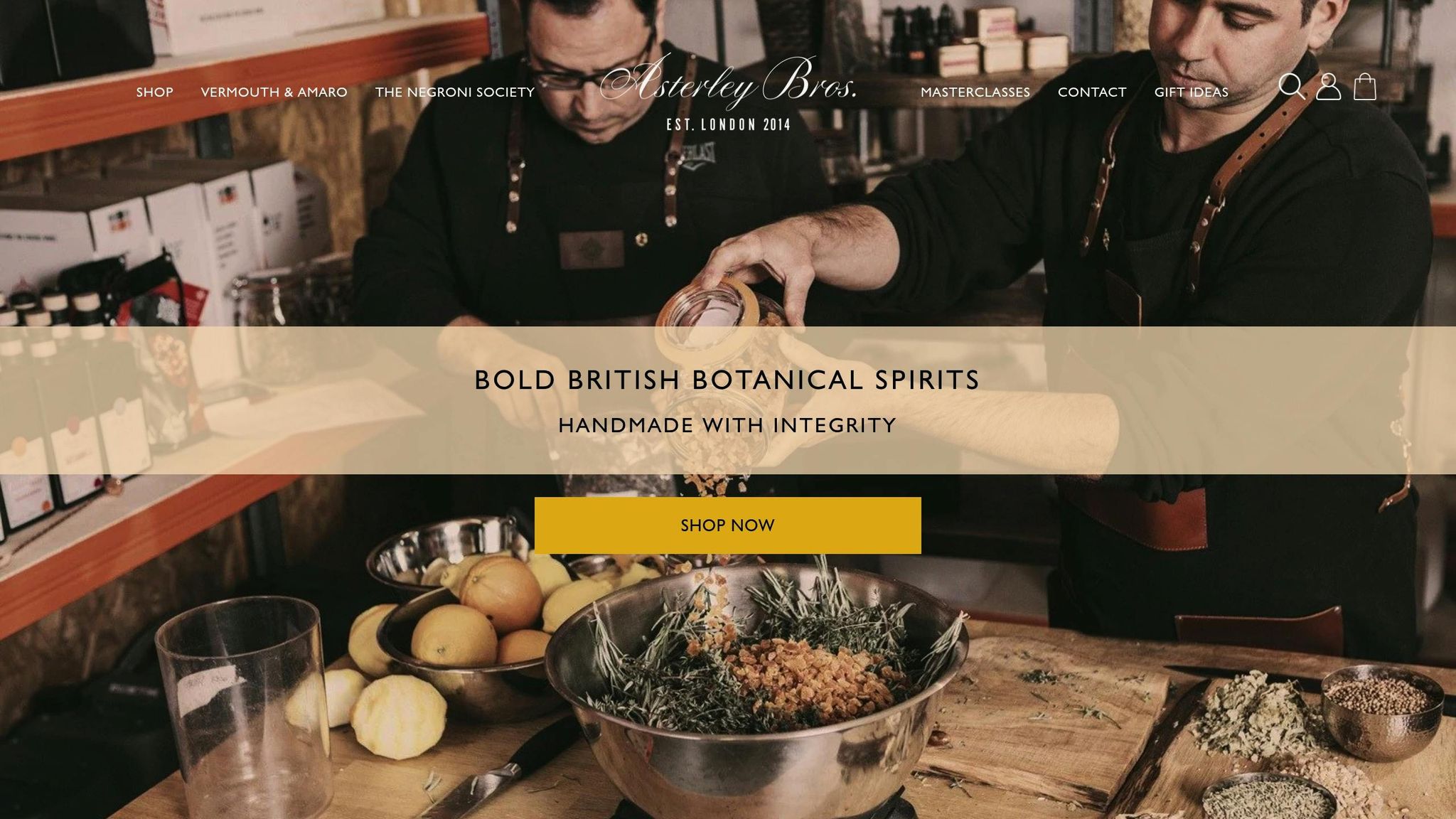
Asterley Bros keeps the tradition of botanical wine alive in small batches in South London. Founders Rob and Jim Berry started the company in 2014, and their range includes SCHOFIELD'S, an English dry vermouth, and ESTATE, an English sweet vermouth. Both are made by macerating botanicals in spirit and blending them with English wine, a modern descendant of the Roman practice of steeping herbs in wine, and both include wormwood, the bitter herb at the heart of Roman wormwood wine. ESTATE is built on English Pinot Noir from Gusbourne in Kent, and SCHOFIELD'S on a blend of English white wines. This approach echoes the Roman belief that great wine begins with a strong foundation. As Pliny the Elder famously noted:
"The vineyard has more influence on the resulting quality of wine than the particular vine".
Beyond their vermouths, Asterley Bros runs the Negroni Society, a members' club that sends a new Negroni recipe every month, and vermouth masterclasses at their South London production space, where guests taste the full range and go behind the scenes.
Ancient Techniques in Modern Vermouth Crafting
Asterley Bros still relies on botanical maceration, the method at the heart of those Roman wines, but steeps its herbs, roots and spices in spirit before blending them with the wine base: ESTATE's 34 botanicals macerate for 21 days at 75% ABV. This process extracts intense flavours. Modern vermouth production has also evolved in its preservation techniques. While the Romans relied on methods like resin coatings, salt water, or high sugar levels to stabilise their wines, today's vermouth is fortified with spirit to an alcohol content of 15–22% ABV, a practice that emerged centuries later, in the 13th or 14th century. ESTATE and SCHOFIELD'S are both 16% ABV. Despite these advancements, the essence of the craft remains the same: creating a balanced, botanical-infused wine that serves both as a delightful drink and a nod to ancient traditions, much like the feasts of old Rome.
Conclusion: The Roman Legacy in Modern Vermouth
The journey from ancient herb-infused wines to the modern vermouth we enjoy today spans over two thousand years. It all started with the Greeks and their oinoi hygieinoi (medicinal wines), which the Romans later embraced and refined. Roman absinthiates (wine infused with wormwood) became a popular tonic, valued for both its medicinal properties and its role in rituals like gustatio, where mulsum was served to awaken the appetite. These early innovations laid the groundwork for what would eventually become vermouth.
Fast forward to 1786, when Antonio Benedetto Carpano in Turin revolutionised this ancient tradition. By blending Moscato white wine with 30 aromatic herbs, including wormwood, vanilla, and saffron, Carpano transformed medicinal wine into a sophisticated aperitif. His creation bridged the gap between ancient methods and the modern palate, setting the stage for vermouth as we know it.
Today, Asterley Bros carries this legacy forward with their handcrafted vermouths. Founders Rob and Jim Berry use traditional botanical maceration, steeping wormwood and carefully chosen herbs in spirit and blending them with English wine to create SCHOFIELD'S and ESTATE. Their focus on an English wine base highlights the timeless importance of craftsmanship.
For those eager to delve deeper into this rich tradition, Asterley Bros offers vermouth masterclasses and the Negroni Society (£14.50 a month plus postage), which sends a new Negroni recipe every month, crafted by the best bars and bartenders, with two Negronis in each delivery. Through these experiences, they invite enthusiasts to explore the artistry and history behind vermouth. Each sip not only reflects the botanicals and techniques passed down through the ages but also embodies the enduring spirit of connection, celebration, and shared enjoyment that has defined this drink for centuries.
FAQs
Did the ancient Romans inspire modern vermouth?
The ancient Romans were instrumental in shaping what we now recognise as modern vermouth, thanks to their inventive wine-making techniques. They were pioneers in infusing wine with a mix of herbs, spices, and botanicals, not just to elevate its flavour but also for its perceived medicinal benefits. Historical figures like Pliny the Elder even documented recipes for these “artificial wines”, which often featured aromatics and honey.
These Roman innovations became the foundation for fortified and botanical-infused wines, a hallmark throughout the empire. When vermouth emerged in Turin during the 18th century, its creators drew inspiration from these time-honoured methods, incorporating ingredients like wormwood, herbs, and spices. The Romans' approach to enhancing and preserving wine bridged the gap between ancient practices and the modern aperitivo tradition, leaving a lasting legacy in every sip of vermouth.
What medicinal uses did the Romans have for herb-infused wines?
The ancient Romans relied heavily on herb-infused wines for medicinal purposes, blending wine with ingredients like rosemary, thyme, and myrrh to create remedies. These concoctions were believed to heal wounds, ease muscle pain, and act as antiseptics, making them a key part of everyday healthcare. They were also thought to neutralise poisons and counter snake bites, serving as quick, alcohol-based solutions in emergencies.
Beyond treating specific ailments, these wines were often consumed as a preventative measure. Roman soldiers, for instance, drank herb-infused wine to ward off dysentery and other digestive problems during their campaigns. The combination of botanical extracts and alcohol was thought to aid digestion, lower fevers, and promote overall well-being. Herb-infused wines played a vital role in Roman medicine, prized for their versatility.
Did the ancient Romans drink vermouth or similar infused wines?
The ancient Romans might not have sipped vermouth as we know it, but they did have a taste for wines infused with herbs, spices, and botanicals, an approach that feels like a precursor to today’s vermouth. Back then, ingredients like thyme, mint, and rosemary were added not just for their flavour but also for their supposed medicinal benefits and ability to preserve the wine.
This infusion process served multiple purposes. It enhanced the taste of lower-quality wines and helped them last longer. Plus, it ensured the wine could survive lengthy journeys in amphorae without losing its quality. These early experiments with herb-infused wines set the stage for many of the methods now used to craft modern aperitifs.