



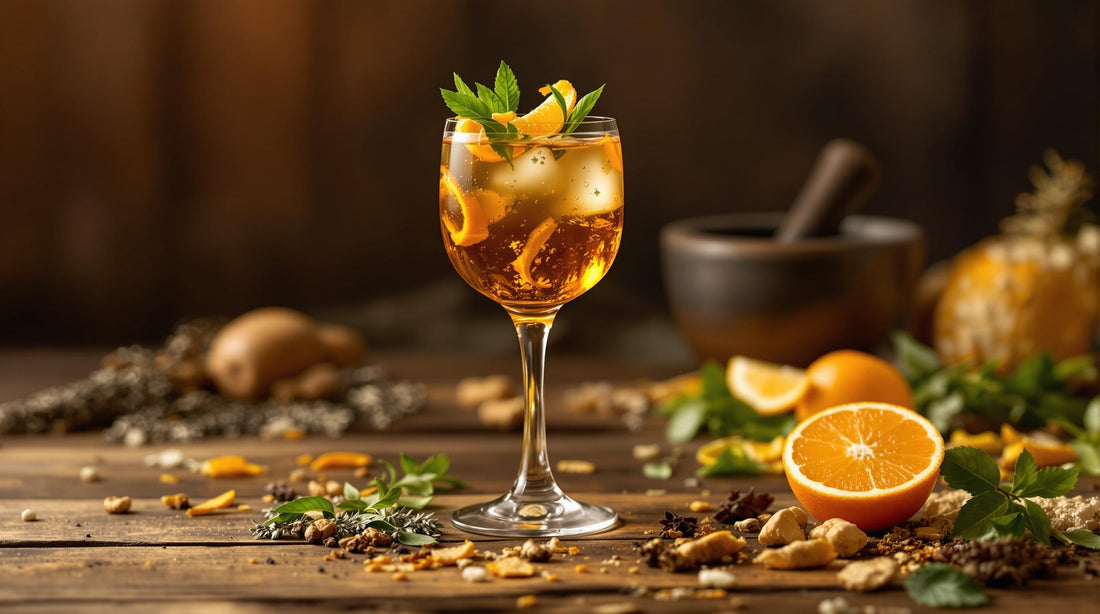
Amaro is more than just a bitter-sweet drink; it's a blend of 20-40 botanicals with roots in ancient Italian herbal remedies. Traditionally served after dinner as a digestivo, it owes its character to key ingredients such as:
- Gentian root: Earthy and intensely bitter; it was prescribed for fevers in the 17th century.
- Wormwood: Sharp and herbal; the plant that gave vermouth its name.
- Cinnamon and clove: Warm spice that rounds out the bitterness.
- Citrus peels: Bright, fragrant bitterness, especially from bitter orange.
Modern amaro production combines traditional methods like maceration with innovations like percolation to preserve its flavour and aroma. Whether enjoyed in cocktails, as a standalone drink, or in non-alcoholic versions, amaro bridges centuries of herbal tradition with contemporary tastes.
Main Botanicals and Their Flavours
Bitter Roots and Herbs
At the heart of any amaro are its bitter elements, which shape both its flavour and its history. Gentian root is a standout ingredient: earthy and intensely bitter, it was a staple of early herbal medicine and remains the backbone of many amari. Wormwood adds a complex, herbal bitterness (it is the plant that gave vermouth its name, from the German Wermut). Meanwhile, quinine, derived from cinchona bark, delivers a distinct, dry bitterness; the bark was used against malaria from the 17th century onwards.
These bitter roots lay the groundwork, but spices are what bring balance and aromatic richness.
Spices in Amaro
Spices play a key role in rounding out amaro’s bitterness. Cinnamon adds warmth and a gentle sweetness. Clove, a traditional choice, is known for its bold aromatic character.
Another essential spice is cardamom, valued for its unique, resinous flavour and a fragrance that lifts the heavier roots.
To elevate the flavour even further, citrus elements are often incorporated for brightness and complexity.
Citrus Components
Citrus ingredients bring a fresh, vibrant touch. Orange peel, especially bitter orange, enhances the aroma and adds a pleasant, zesty bitterness. Bergamot, a citrus fruit primarily grown in Calabria, Italy, adds a floral, perfumed note that enriches the flavour of amaro.
Together, these botanical elements (bitter roots, warming spices and zesty citrus) combine to create the unique character of traditional amaro, and it is the balance between them that gives each amaro its depth.
How the Amaro Tradition Developed
The After-Dinner Digestivo
Amaro's distinct bitter taste has long shaped when it is drunk. In Italy, amari are traditionally served after dinner as a digestivo, a custom rooted in amaro's origins as a herbal tonic. Bitter botanicals such as yarrow and cinchona bark were once used in herbal medicine; in the glass today, they are there for their flavour.
From Apothecary Shelf to Bar Shelf
Many of amaro's botanicals, from cinnamon to clove, were staples of the old herbals and dispensatories, the reference books early apothecaries used to prepare their tonics. Modern versions honour this heritage in their recipes: DISPENSE, our modern British amaro, was inspired by Culpeper's 1653 London Dispensatory, and its 24 botanicals include gentian, English hops, wormwood, orange and vanilla.
Other botanicals in amaro, such as chamomile, bergamot and ginger, have a long history in folk medicine; in amaro today they bring soft floral, citrus and warming notes. Traditional methods like hot infusion are still used to draw out their flavours and aromas.
Amaro's roots as a herbal tonic are still evident in its ingredients, but today it is made and enjoyed for its flavour. Its botanicals bridge the gap between historical herbal tradition and the contemporary cocktail bar.
Making Amaro Today
Old and New Production Methods
Today's amaro production combines time-tested techniques like maceration (steeping botanicals in alcohol or water) and decoction (boiling ingredients like bark) with newer methods. These approaches help ensure consistent flavours while keeping the herbal character that has always been part of amaro's identity. At Asterley Bros, for instance, the botanicals for DISPENSE are macerated cold in 75% ABV spirit for 28 days and then blended with English Pinot Noir.
One such modern method is percolation, where botanicals are finely chopped and their essence is extracted using water and alcohol in a controlled environment. This technique is efficient and preserves the intricate balance of flavours and aromas amaro is celebrated for. While the production methods have evolved, the choice of botanicals still plays a key role in creating regionally distinct flavours.
Local Botanical Differences
Amaro's flavour and character often reflect the local ingredients available in the region where it's made. Each area's unique botanicals bring their own flavour profiles. Some Italian producers, for example, blend herbs from their own region with others sourced from as far afield as Eastern Europe and South Africa.
The ripening phase is another critical step, allowing the infusion to naturally develop its complex flavours. Some producers, for instance, rest the infusion overnight in temperature-controlled baths during this stage.
In the UK, producers are now incorporating local botanicals to create amaro that mirrors regional tastes and characteristics. DISPENSE, for example, is built on a Sicilian family recipe reworked with British hedgerow botanicals. This approach stays true to the traditional essence of amaro while introducing new flavours derived from local herbs and roots.
Modern amaro production shows how innovation can enhance traditional craftsmanship. Producers today are dedicated to preserving the qualities of their carefully chosen ingredients while ensuring each batch delivers consistent quality.
Amaro in Modern Drinks
Amaro Cocktails Today
Today's bartenders are embracing amaro to create cocktails with layered, rich flavours. A great example is the Paper Plane, which you can make with equal parts bourbon, ASTERLEY ORIGINAL, DISPENSE and lemon juice. This cocktail highlights how amaro can bring balance and depth to modern recipes.
ESTATE sweet vermouth and DISPENSE both bring complex botanical profiles to craft cocktails, adding a bitter-sweet touch that works especially well in lower-alcohol drinks, where every ingredient needs to pack a punch.
Zero-Proof Amaro Options
The growing interest in alcohol-free beverages has led to creative non-alcoholic amaro options. Some non-alcoholic producers have developed methods to capture the botanical essence of traditional amaro, using techniques like glycerine or water-based extraction. These alternatives aim for similarly intricate flavours without the alcohol, catering to those who prefer not to drink.
For those experimenting at home, it's possible to mimic amaro's flavours using non-alcoholic spirits, herbal teas, and natural sweeteners. These options stay true to amaro's botanical roots while aligning with modern preferences for alcohol-free choices.
Amaro's Herbal Heritage
Amaro's history as an apothecary tonic still shapes how it is made today. Ingredients like gentian and yarrow, once used in herbal medicine, now feature in cocktails for their bitterness and aroma, and alcohol remains the solvent of choice for drawing out their flavour.
"It's a wonderful solution to concentrate things... That's why people would use it. It's much better than water. The alcohol can extract more", explains Derek Brown, president of Drink Company.
The Asterley Bros range draws on this botanical heritage for flavour, and the full botanical list for each product is published on its product page.
Amaro & Other Italian Herbal Remedies
Conclusion: Amaro's Dual Nature
Amaro has carved out a unique space in the world of drinks, offering everything from classic cocktails to alcohol-free alternatives. Its journey celebrates a blend of history and modern trends.
Traditional techniques like maceration and percolation help retain its rich flavours and herbal character. Today, amaro’s appeal lies in its ability to straddle two worlds: bartenders use products like DISPENSE and ASTERLEY ORIGINAL to create bold cocktails, while many drinkers are drawn to its centuries-old herbal story.
Key ingredients, such as gentian root and citrus peel, give amaro its signature bitter-sweet taste and link every glass to centuries of herbal tradition. This balance of history and pleasure makes it a favourite among curious drinkers.
Whether enjoyed on its own, mixed into cocktails, or as a non-alcoholic option, amaro continues to charm drinkers everywhere. By blending tradition with modern innovation, it remains a growing force in today’s drinking culture.