



Vermouth, unlike spirits like gin or whisky, is a fortified wine that starts to lose quality once opened. Proper storage is key to maintaining its flavour and aroma. Here's what you need to know:
- Unopened bottles: Store in a cool, dark place, away from heat and sunlight. They can last 1–4 years if stored correctly.
- After opening: Always refrigerate immediately. This slows oxidation and keeps the flavour intact for 3–4 weeks. Sweet vermouth lasts slightly longer than dry due to its higher sugar content.
- Tips to extend freshness: Use a wine stopper, transfer to a smaller bottle to reduce air exposure, or use inert gas products like Private Preserve.
Signs of spoilage include a dull aroma, sour or medicinal taste, and colour changes. While spoiled vermouth isn’t ideal for cocktails, it can still be used in cooking.
How to Store Vermouth Before and After Opening
Vermouth needs a bit of extra attention because of its lower alcohol content. Storing it correctly before and after opening helps maintain its flavour and quality.
Storing Unopened Vermouth
To keep unopened vermouth at its best, store it in a cool, dark place like a cupboard or cellar. Avoid spots exposed to direct sunlight or heat, such as a windowsill or near a stove. Heat can cause the delicate botanicals in vermouth to break down faster, so maintaining a stable, cool environment is key. When stored correctly, an unopened bottle can stay fresh for anywhere between one and four years.
For bottles with screw caps, keep them upright. If your bottle has a cork, store it on its side to keep the cork moist and prevent air from sneaking in. But once you open the bottle, you’ll need to take some additional steps.
Storing Opened Vermouth
Once you’ve opened your vermouth, proper storage becomes even more important. The first rule? Refrigerate it immediately. Keeping it cold slows down oxidation, which helps preserve the flavour. In fact, refrigeration can keep an opened bottle tasting fresh for up to a month, whereas leaving it at room temperature leads to noticeable degradation.
Make sure the bottle is stored upright in the fridge, with the cap or stopper tightly sealed. This limits air exposure, which is a major culprit in flavour loss. As America's Test Kitchen explains:
"Refrigeration does a better job of preserving flavour because low temperatures slow down the loss of aromatic compounds and the lack of light slows oxidation."
Think of vermouth like white wine: once opened, it belongs in the fridge, not on a shelf. This simple step can make all the difference in keeping your vermouth tasting its best.
How to Reduce Oxidation in Opened Vermouth
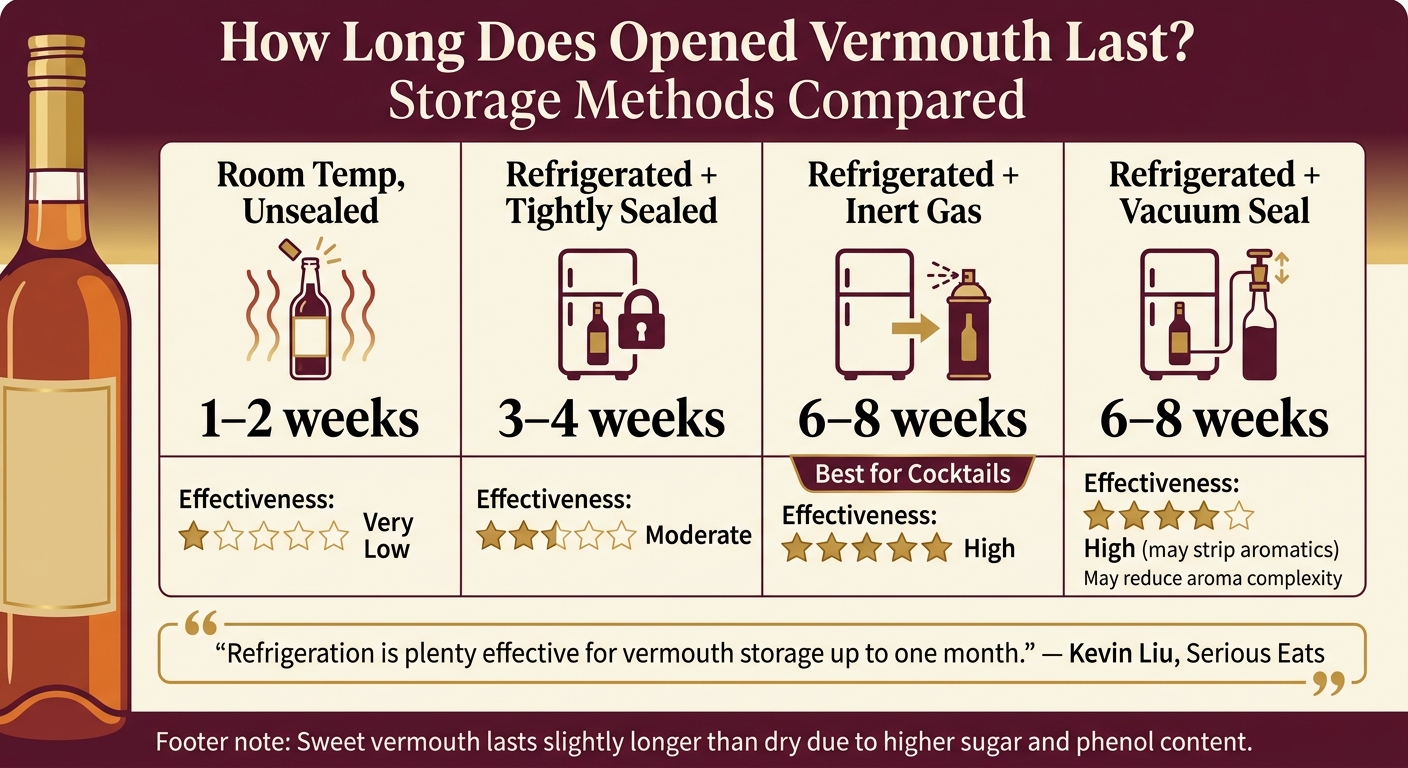
How Long Does Opened Vermouth Last? Storage Methods Compared
Refrigerating vermouth is crucial, but there are additional steps to keep it fresh for longer.
Using a Wine Stopper or Resealing Tightly
Once you've poured your vermouth, seal it tightly to reduce air exposure. If the original screw cap isn't doing the job, try a reusable rubber wine stopper. This simple action, combined with refrigeration, helps minimise oxygen contact and preserves the liquid's quality.
Transferring to a Smaller Bottle
As the vermouth level drops in its original bottle, the remaining air increases, speeding up oxidation. To combat this, transfer the remaining liquid into a smaller, dark glass bottle (preferably 375ml) and fill it to the brim to minimise headspace. This technique helps maintain the vermouth's flavour profile.
"If you pour leftover wine or vermouth into a smaller bottle with little to no headspace, you'll protect the wine from oxidation." (Kevin Liu, Author and Cocktail Expert)
If you're opening a 750ml bottle and know it won't be finished quickly, divide it into two smaller bottles right away. This reduces exposure to air from the start.
Using Inert Gas Preservers
For those who want to keep vermouth fresh for weeks, inert gas preservation is an excellent option. Products like Private Preserve (a mix of nitrogen, argon, and CO₂) and Bloxygen Preserver (pure argon) displace oxygen in the bottle's headspace. By creating a protective gas layer over the liquid, these tools significantly slow down oxidation.
In a blind taste test conducted by cocktail researcher Kevin Liu at Heritage Restaurant in Richmond, Virginia, a panel of seven judges, including professional bartenders, compared a sweet vermouth stored under different conditions over 30 days. Vermouth treated with inert gas was almost indistinguishable from a freshly opened bottle, with only 28.6% of tasters identifying it as stored, less than the 33% expected by chance.
"If I had to store vermouth for longer than a month or two, I would apply inert gas and refrigerate." (Kevin Liu, Co-owner of The Tin Pan and Author)
Keep in mind that inert gas needs to be reapplied each time you open the bottle. For the best results, combine all three methods: transfer the vermouth to a smaller bottle, use inert gas, and refrigerate.
| Storage Method | Expected Shelf Life (Opened) | Effectiveness |
|---|---|---|
| Room temperature, unsealed | 1–2 weeks | Very low |
| Refrigerated, tightly sealed | 3–4 weeks | Moderate |
| Refrigerated + inert gas | 6–8 weeks | High |
| Refrigerated + vacuum seal | 6–8 weeks | High (but may strip aromatics) |
How Long Opened Vermouth Lasts
Shelf Life of Opened Vermouth
Once opened, vermouth keeps its best flavour for about 4 to 8 weeks if refrigerated and sealed tightly. After this period, it’s still safe to drink, but its taste and aroma will start to decline.
"For the best flavor in cocktails, keep the bottle in the refrigerator for no longer than two months." (America's Test Kitchen)
At room temperature, vermouth spoils much quicker, often developing unpleasant flavours within 1 to 2 weeks.
Even if it has lost its original aroma, vermouth can still be used as a substitute for white wine in cooking. Think pan sauces or risottos: it’s a handy ingredient for several months after opening, as noted by America's Test Kitchen.
Factors That Affect Shelf Life
The shelf life of opened vermouth depends on several factors, which highlight the importance of proper storage: temperature, light, and air exposure.
Temperature plays a major role. Chemical reactions that cause degradation occur twice as fast for every 10°C increase in temperature. Leaving a bottle on a warm shelf will make it spoil much faster than if it’s kept chilled in the fridge.
Light and air contact also speed up the process. UV light causes photo-oxidation, breaking down the botanical ingredients that give vermouth its flavour. Meanwhile, oxygen entering the bottle allows aromatic compounds to escape, reducing its character over time. To slow this down, you can transfer leftover vermouth to a smaller bottle, use an inert gas preserver, or ensure the bottle is sealed tightly.
| Factor | Impact on Shelf Life |
|---|---|
| Higher temperature | Speeds up spoilage (doubles degradation rate per 10°C rise) |
| UV light exposure | Breaks down flavour and colour compounds |
| Air exposure (large headspace) | Increases oxidation and aroma loss |
| Lower alcohol content (15–22%) | Slows spoilage but doesn’t stop it |
Interestingly, sweet (rouge) vermouth holds up a bit better than its dry counterpart. This is because it contains more phenols, natural compounds from grape skins and seeds that help slow oxidation. However, since all vermouth is wine-based, refrigeration is essential to maintain its flavour for as long as possible.
Next, find out how to tell if your vermouth has gone bad.
How to Tell If Vermouth Has Gone Off
Once you know how to slow down vermouth's decline, it's just as important to spot when it has passed its prime.
Signs of Spoilage
Your sense of smell is your first clue. Fresh vermouth has a lively aroma with herbal, floral, and citrusy notes. If it smells flat or dull, it may have started to degrade. A sharp, vinegar-like scent is a clear sign that the bottle has gone bad.
If the aroma seems fine, take a small sip. Spoiled vermouth often tastes sour, bitter, or medicinal, which means it has lost its flavour and should be discarded.
Changes in colour can also signal spoilage. A darker or brownish hue usually indicates oxidation or damage from UV light.
| Sign | What It Suggests |
|---|---|
| Lacklustre aroma | Loss of key aromatics |
| Muted, bland flavour | Breakdown of esters and terpenes |
| Sour or vinegar-like taste | Microbial spoilage caused by acetic acid bacteria |
| Medicinal bitterness | Long-term oxidation beyond safe storage time |
| Darkening or colour change | Oxidation or UV photodegradation |
How Vermouth Degrades Over Time
Vermouth doesn't spoil instantly: it deteriorates gradually. Tests by America's Test Kitchen found that vermouth stored at room temperature lost its citrus aroma and became flat within a month. Refrigerated bottles lasted longer but started tasting bitter and medicinal after two months.
To keep track of its quality, taste your vermouth when you first open it. This gives you a clear baseline to compare against as it ages. If the flavour becomes dull but not sour, it could still be useful in cooking. Dishes like risottos or pan sauces can handle the loss of delicate botanicals. However, for cocktails, flavour is everything: if it doesn't taste right, it won't make a good drink. These tips can help you decide whether to replace your vermouth or repurpose it in the kitchen.
Tips to Keep Vermouth Fresh for Longer
If you want to enjoy your vermouth at its best, proper care and a few simple tricks can make all the difference.
Note the Date You Open the Bottle
Grab some masking tape and jot down the date you first open the bottle. This is especially handy if you’re juggling a few different bottles. As a general rule, dry vermouth is best consumed within three weeks, while sweet vermouth can stay fresh for four to six weeks when stored in the fridge. Without marking the date, it’s easy to lose track of how long it’s been sitting there.
Use Opened Bottles Within a Few Weeks
Once you pop the cork, the clock starts ticking. If left at room temperature, vermouth can lose its flavour or even turn sour in just one to two weeks. Storing it in the fridge slows this process, keeping it tasting great for three to six weeks.
"Refrigeration is plenty effective for vermouth storage up to one month." (Kevin Liu, Serious Eats)
Dry vermouth, in particular, needs extra care. With less sugar than its sweet counterpart, it’s more fragile, so prioritise finishing an open bottle of dry vermouth before reaching for the sweet one.
Buy Smaller Bottles If You Use Vermouth Occasionally
If vermouth isn’t a regular feature in your drinks rotation, opt for a smaller bottle: 375ml is a good choice. This way, you can finish it while it’s still fresh, avoiding the disappointment of a bottle that’s gone past its prime. Asterley Bros vermouths such as ESTATE and SCHOFIELD'S, for example, come in 500ml bottles rather than the usual 750ml or 1 litre, so you can enjoy vermouth without worrying about waste.
Conclusion: Getting the Most from Your Vermouth
Vermouth is a lively drink with a personality all its own. Unlike whisky or gin, its wine base means it begins to change as soon as you pop the bottle open, and how you store it makes all the difference in preserving its flavour.
The basics are simple: keep unopened bottles in a cool, dark spot, and once opened, move them to the fridge. Make sure the bottle is sealed tightly, stored upright, and consider using an inert gas spray to keep it fresh for longer, ideally beyond the typical four to six weeks. As Courtney Iseman of Tasting Table aptly notes:
"You may find yourself amazed at how good vermouth is when it's stored properly."
This level of care is especially important for preserving the delicate balance of botanicals in vermouths like our ESTATE and SCHOFIELD'S. Made with 34 and 28 botanicals respectively, from barks and roots to herbs and flowers, their intricate profiles deserve proper attention. By following these steps, every glass will reflect the craftsmanship that goes into them.
A few thoughtful habits (like dating the bottle, keeping it chilled, and enjoying it within a few weeks) will ensure every sip is as it was meant to be.
FAQs
Can I freeze vermouth to make it last longer?
No, freezing vermouth isn’t a good idea. Since it’s a wine-based drink, it’s best to store it in the fridge after opening. This helps slow down oxidation and keeps its subtle botanical flavours intact. Make sure to store the bottle upright in the refrigerator and try to use it within 1–2 months for the best taste, though it can last up to 3 months for basic use. If you’re struggling to finish a bottle, consider buying smaller sizes to ensure your cocktails stay fresh.
Does vermouth need refrigerating before it’s opened?
No, vermouth doesn’t need to be refrigerated before opening. Keep it upright in a cool, dark spot, ideally between 7°C and 16°C, and make sure it’s away from direct sunlight. However, once opened, it must be refrigerated to maintain its flavour and quality.
What’s the best way to store vermouth if I only use it occasionally?
To ensure your vermouth stays fresh for occasional use, choose smaller bottles to minimise air exposure. Once opened, store the bottle upright in the fridge to slow down oxidation. For added preservation, consider using a vacuum wine stopper or an inert gas. It's also helpful to note the opening date on the label, so you can monitor its quality over time. If you notice an acidic smell or a bitter taste, it’s a clear sign that the vermouth should be discarded.