



If you want Campari with more citrus and whisky warmth, I’d pick the Italian Gentleman. If I want a firmer, more spirit-led drink, I’d go for a Negroni.
In simple terms:
- Italian Gentleman = bourbon, Campari, lemon juice, and sugar syrup
- Negroni = gin, Campari, and sweet vermouth
- The Italian Gentleman is shaken and served straight up
- The Negroni is stirred and usually served over ice
- The Italian Gentleman first appeared in 2014
- The common Italian Gentleman split is 30 ml + 30 ml + 15 ml + 5–7.5 ml
What matters most is how they drink. The Italian Gentleman is more tart, lighter in feel, and easier for many people who find a Negroni too bitter. The Negroni is deeper, more herbal, and more direct.
At a glance, I’d describe them like this:
- Italian Gentleman: bright, bitter, citrus-led
- Negroni: bitter, herbal, spirit-forward
- Best fit for the Italian Gentleman: pre-dinner, especially if you like whisky sours
- Best fit for the Negroni: pre-dinner, especially if you like gin and vermouth
Quick Comparison
| Drink | Base spirit | Other main ingredients | Method | Serve | Main taste |
|---|---|---|---|---|---|
| Italian Gentleman | Bourbon | Campari, lemon juice, sugar syrup | Shaken | Chilled coupe, no ice | Tart, bittersweet, lighter |
| Negroni | Gin | Campari, sweet vermouth | Stirred | Rocks glass, over ice | Bitter, herbal, weightier |
So if you’re deciding between them, I’d keep it simple: bourbon and lemon for zip; gin and vermouth for depth.
If you’re making either at home, here are my picks. For the Negroni’s sweet vermouth, reach for ESTATE, our English sweet vermouth (Silver, World Vermouth Awards 2021; 1 star, Great Taste 2021; 2 stars, Great Taste 2026). For the red bitter in either drink, try NEGRONI JUICE, our blood-orange British red bitter and Campari alternative.
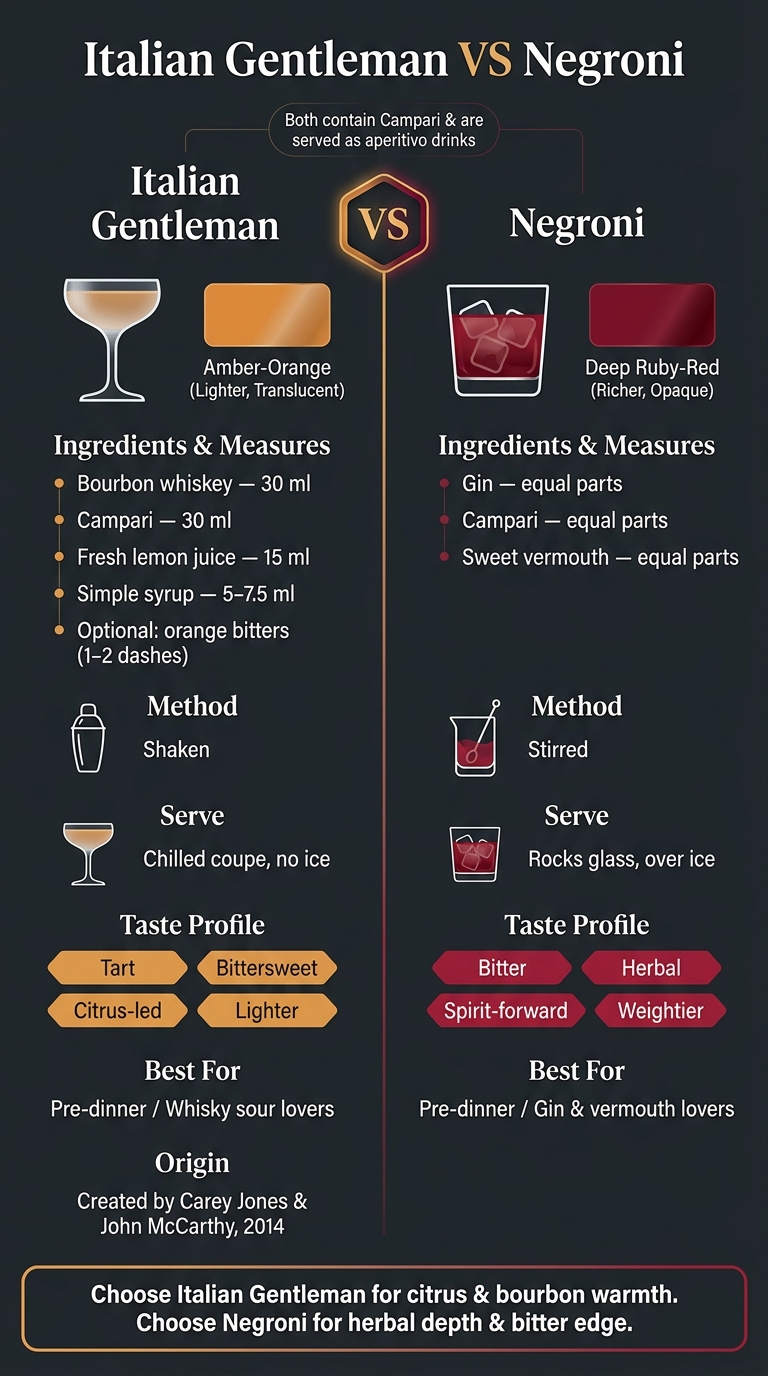
Italian Gentleman vs Negroni: Side-by-Side Cocktail Comparison
Italian Gentleman recipe: ingredients, proportions and method
Core ingredients and proportions in ml
The standard build uses bourbon, Campari, lemon juice and simple syrup. The lemon juice and syrup do the balancing work instead.
| Ingredient | Measure | Role |
|---|---|---|
| Bourbon whiskey | 30 ml | Body, warmth, vanilla and spice |
| Campari (or NEGRONI JUICE) | 30 ml | Bitterness, herbal complexity, colour |
| Fresh lemon juice | 15 ml | Acidity, brightness, structure |
| Simple syrup | 5–7.5 ml | Balance, softness |
Optional: orange bitters (1–2 dashes) for extra aroma.
Bourbon is the backbone here, so it helps to pick one with clear vanilla and spice notes that can hold its own against Campari’s bitterness. If you’d like the whiskey to come through more, use 45 ml bourbon and 30 ml Campari for a more bourbon-led split.
How to make it step by step
Start by chilling a coupe glass ahead of time.
Add all the ingredients to a cocktail shaker, fill it with fresh ice, then shake hard for about 20 seconds. That chills the drink and adds the right amount of dilution.
Double-strain into the chilled coupe to catch ice shards and pulp.
Finish with an expressed orange twist.
How it tastes and when to serve it
The Italian Gentleman is bright, bitter and bourbon-led. Campari runs through the centre of the drink, while lemon keeps it lifted and fresh. It works best as a pre-dinner aperitivo: the bitterness wakes up the palate, and the acidity stops it from feeling heavy. That mix of bitterness and brightness gives the drink its aperitivo character.
Origin and place within aperitivo culture
Where the Italian Gentleman comes from
The Italian Gentleman was created by Carey Jones and John McCarthy and first appeared in Food & Wine in 2014. The recipe later went into their 2018 book, Be Your Own Bartender.
At its core, the drink blends the bitter edge of a Negroni with the citrus-first shape of a Whiskey Sour. That mix helps explain why it feels so at home before dinner: it has bite, but it also has lift.
How it fits into aperitivo culture
Aperitivo means "to open": bitter drinks are traditionally served before dinner to sharpen the appetite. The Italian Gentleman slips into that part of the evening with ease. Campari brings the bitter note, while lemon juice and simple syrup make the drink brighter and easier-going than a spirit-forward aperitivo like the Negroni.
It is often served before dinner with small bites such as olives, bruschetta, or prosciutto-wrapped melon.
That Campari-first build is also why the Negroni comparison is so handy.
Italian Gentleman vs Negroni: the key differences
Ingredients and structure
The clearest difference comes down to the base spirit. A Negroni starts with gin, while the Italian Gentleman switches to bourbon. That swap brings vanilla, warmth and baked spice into the glass. One change, and the whole drink starts pulling in a different direction.
The supporting ingredients shift as well. A Negroni pairs Campari with sweet vermouth. The Italian Gentleman drops the vermouth and uses fresh lemon juice and simple syrup instead. So instead of a stirred aperitivo-style drink, you get a Campari-forward sour with more zip and lift.
That change in build affects more than flavour. It shapes how the drink is mixed, served and felt on the palate.
Method, texture and dilution
Because the Italian Gentleman includes citrus, it has to be shaken, not stirred. Shaking adds air and gives the drink a lighter texture. A Negroni goes the other way. It’s stirred, which keeps it clear and gives it that smooth, weightier mouthfeel people expect.
You can see the difference in the glass, too:
- The Italian Gentleman is usually double-strained into a chilled coupe
- The Negroni is usually served over ice in a rocks glass
Those choices aren’t just for show. They shape dilution, texture and how the bitterness lands.
Bitterness, sweetness and which drink suits which palate
With a Negroni, Campari’s bitterness sits right up front, held in check by the herbal sweetness of sweet vermouth. It feels direct and firm. The Italian Gentleman leans sweeter because of the syrup, and the bourbon adds vanilla and baked spice notes. That means the bitterness can come across as brighter and sharper rather than deep and brooding.
In plain terms, the Italian Gentleman tends to suit people who like whisky drinks with a tart citrus edge. The Negroni makes more sense if you want gin, herbal depth and a more bitter profile. And if a Negroni has ever felt a bit much, the Italian Gentleman can be an easier way in. The lemon and syrup soften the edges and make Campari easier to enjoy.
NEGRONI WEEK: Italian Gentleman Cocktail Recipe
Conclusion: how to choose between the two
Both drinks use Campari, but they fit different moods.
The main difference comes down to the base spirit and the way each drink handles bitterness. The Italian Gentleman uses bourbon and lemon juice, so it leans more citrus-forward, with a slight warming note and a lighter feel in the glass. The Negroni, on the other hand, uses gin and sweet vermouth, which makes it more bitter, more herbal, and more spirit-forward.
Choose the Italian Gentleman if you want bright citrus and bourbon warmth. Choose the Negroni if you want herbal depth and a firmer bitter edge.
FAQs
Can I use rye instead of bourbon?
Yes, you can.
Bourbon is the classic pick. Its vanilla and baked spice notes soften Campari’s bitterness and give the drink a rounder, slightly sweeter edge.
Rye takes it in a different direction. It makes the drink spicier, drier, and less sweet than bourbon.
This is also a common modern twist. Swapping the whiskey base is a simple way to tune the drink to your own taste.
Is the Italian Gentleman sweeter than a Negroni?
Yes. The Italian Gentleman is usually sweeter than a Negroni.
The main reason is simple: it includes simple syrup. That extra sweetness softens the bourbon and Campari, giving the drink a rounder, smoother profile.
A Negroni works differently. It leans on the balance between gin, Campari, and sweet vermouth, with no added syrup to push the drink in a sweeter direction.
What food pairs well with an Italian Gentleman?
The Italian Gentleman goes especially well with Italian antipasti. Think bruschetta topped with creamy ricotta, Brie, or Parma ham. Melon wrapped in prosciutto is another great match.
As an aperitif, it’s at its best with light, savoury bites that balance the drink’s bitter Campari, bourbon, and citrus notes.