



A new aperitif or vermouth starts with a clear brief, then lives or dies on base choice, botanical structure, sugar level, and tasting. If you want the short answer, the process is this: set the style, taste rival bottles, build a recipe, run separate extractions, blend in stages, then check clarity and batch match before bottling.
We reach first for DISPENSE as the working example because it shows the process in the glass. It is built on three base liquids and 24 botanicals, with a lower sugar style aimed at mixed serves, so you can see how early recipe choices shape the final drink.
If you are building one yourself, I would keep these points in front of me from day one:
- Start with the serve: neat, with tonic, over ice, or in cocktails
- Pick the right base: vermouth must begin with wine
- Choose botanicals by job: bitterness, aroma, mid-palate, finish
- Control extraction: separate macerations give you more control
- Set sugar with care: less sugar can show more herb and spice, but can also thin the texture
- Test stability: clarity, colour, aroma, and bottle-to-bottle match all matter
A few facts from this example help fix the idea:
- 3 base liquids: English wine, organic grain spirit, molasses-based spirit
- 24 botanicals in the recipe
- About half of its ingredients home grown, with the rest imported (Beer52, 2021)
- Around 6 weeks from maceration through settling, racking, clarification, and bottling
| Stage | What I would check | Why it matters |
|---|---|---|
| Brief | ABV, sweetness, bitterness, serve | Stops the recipe drifting |
| Bench tasting | Rival bottles and house style | Shows the gap in the market |
| Base choice | Wine, grain spirit, molasses spirit | Changes body, acidity, aroma |
| Botanical build | Bittering, top note, middle, finish | Gives shape to the drink |
| Trials | Separate macerations and blend tests | Helps keep flavours clear |
| Final prep | Clarity, stability, fill, cork | Keeps each bottle in line |
In short, a good bottle is not one clever idea. It is a chain of small decisions that need to work together in the glass.
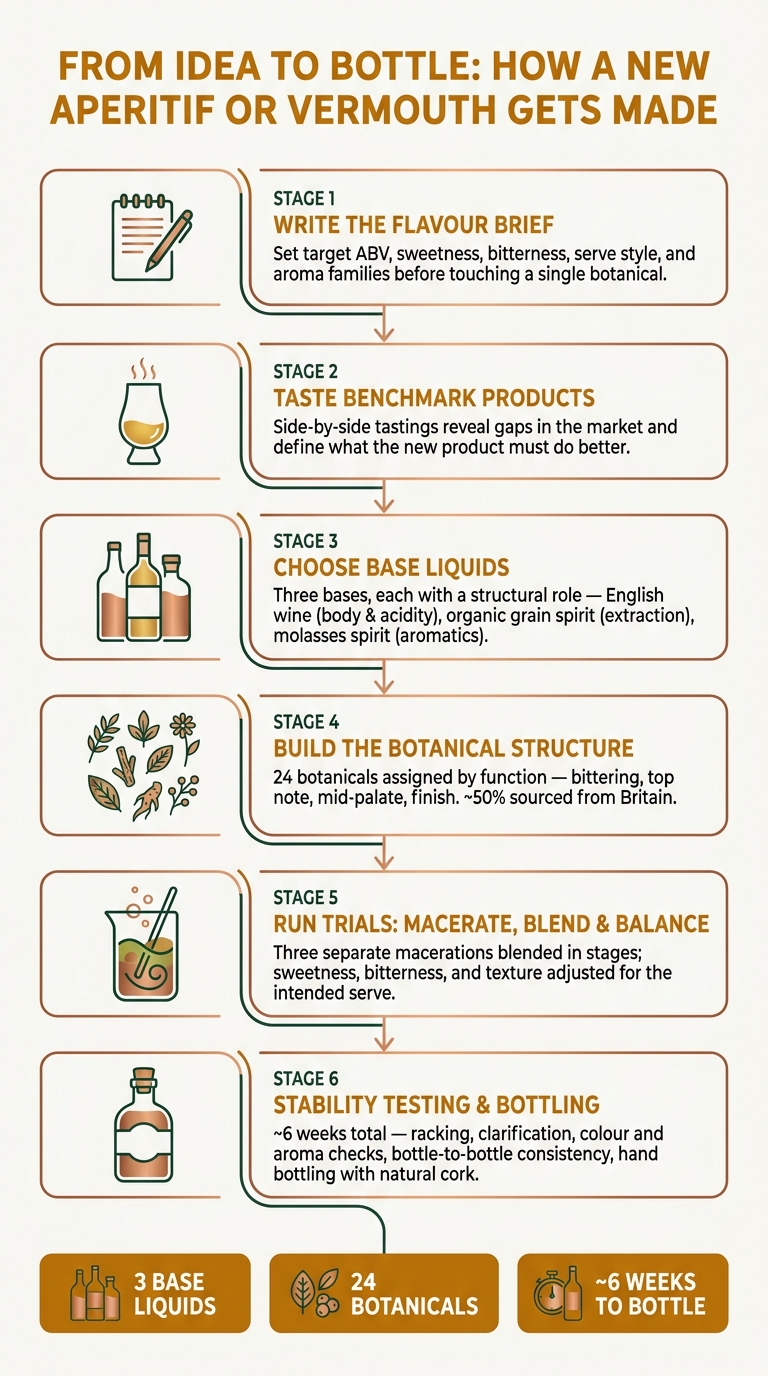
From Idea to Bottle: The 6-Stage Aperitif & Vermouth Development Process
Vermouth and the Logic of Botanicals
2. Start with the concept, flavour brief and benchmarks
Before you weigh botanicals or crack open the base wine, write a clear flavour brief. It gives the whole project a fixed point. Every call that follows should link back to it.
Write a flavour brief you can actually test
Set out the target drinker, the occasion, and the serve: over ice, in a Negroni, with tonic, or as a digestif. Add the target ABV, sweetness, bitterness, and the main aroma families. It also helps to note where the bitterness will come from. British hops such as Fuggles and Goldings can give a rounder bitterness.
For DISPENSE, the brief leaned towards a drier, more structured profile made for mixing, with a lower sugar target than most benchmark products. That only means something if you can test it against actual bottles, not just leave it sitting on a page.
Taste benchmark samples before building a recipe
Once the brief is written down, taste what is already out there. Side-by-side tastings show where a new product needs to earn its place, whether that is more structure, more mid-palate depth, or a different balance between sweetness and bitterness.
Rob Berry, Director and co-founder of Asterley Bros, told Beer52 in 2021 that a classic red bitter can feel two-dimensional: a big sugar hit up front that transitions quickly into a lean, direct bitterness. That left room for something with more depth and development. Benchmarks can also include legacy formulas and historical references. The aim is simple: work out what the new drink should do better before anyone starts trialling recipes.
Turn the brief into a working recipe sheet
Once the brief has been checked against benchmark bottles, draft the first recipe sheet. Keep it practical. A working spec should cover the base liquids, target ABV, sweetness target, botanical count, and colour target.
For DISPENSE, that meant three base liquids (English wine, organic grain spirit and a molasses-based spirit), each picked for a different structural role. The recipe also uses 24 botanicals. Writing these parameters down early can save expensive changes later. That sheet then guides the choice of base liquid and the botanical structure, ready for the next stage of development.
3. Choose the base liquid and build the botanical structure
Base wine or spirit: how it shapes body, acidity and flavour
This is the point where the brief turns into a working recipe. The base liquid does far more than carry flavour. It sets the texture, the acidity and the way the botanicals show up in the glass. Get this part wrong and you spend the rest of the process trying to fix the blend.
Grain spirit is well suited to extraction, especially with roots and barks. A molasses-based spirit helps hold onto delicate aromatics and keeps their rich, estery character in place. A wine base brings body, length, acidity and a softer feel.
DISPENSE uses these bases in layers, with each one doing a clear structural job. The grain spirit drives extraction, the molasses spirit protects aromatics, and the English Pinot Noir wine adds backbone, acidity and complexity. Used together, they give a more balanced profile than a single base on its own.
Choose botanicals by what they do, not just what they are
Start with function, not a shopping list. Each botanical needs a clear job.
Use bittering botanicals to shape structure, bright aromatics to form the first impression, and mid-palate botanicals to link the finish back into the rest of the drink. Bitterness needs care too. British hop varieties such as Fuggles and Goldings give a softer bitterness, while more aggressive varieties can take over the blend. The recipe itself draws on a broad mix of botanicals.
Once those roles are clear, attention shifts to where each botanical comes from and how steady that supply will be.
Sourcing: dried vs fresh, local vs imported
Choose fresh or dried based on repeatability, flavour and extraction. Sourcing affects more than cost. It shapes consistency from batch to batch.
Repeatability comes first. If an ingredient works well once but cannot be sourced again, or arrives in uneven condition, it causes problems in production. Asterley Bros weights its sourcing towards British ingredients (when Beer52 profiled DISPENSE in 2021, about half of its ingredients were home grown), which helps cut exposure to longer lead times and higher import costs. Where imports are needed, work with reliable suppliers and inspect every delivery before production.
Those sourcing decisions feed straight into maceration, blending and balance.
4. Run trials: maceration, blending and balancing sweetness with bitterness
With the base and botanical structure in place, the next job is extraction, blending and balance. This is where the drink stops being a set of parts and starts to feel like one thing in the glass.
Trial macerations and controlling extraction
Separate tinctures give you tighter control over how each botanical group extracts.
DISPENSE does this through three separate macerations: one in organic grain spirit, one in molasses-based spirit for delicate aromas, and a third in the wine base. Keeping them apart at this stage helps each group stay clear before the final blend comes together. Once the extracts are ready, the task shifts from pulling flavour out to putting flavour together without blurring the edges.
Blend in stages and taste at each step
Blend in stages and taste after each addition.
Those checkpoints matter. In the glass, you want clear layers of aroma, not one flat note. On the palate, look at the middle: does it carry enough herbal detail, or does it drop away too soon? Then check the bitterness. It should feel woven into the drink and rounded off, not harsh or separate from the rest of the profile.
Taste the blend neat and in the serve it is meant for. A drink can seem settled on its own, then shift once dilution enters the picture.
Record every adjustment as you go. A small change in botanical load or maceration ratio can move the profile more than you expect, so batch notes need enough detail to let you make the same result again. Only after that can sweetness, bitterness and texture be fixed for the intended serve.
Set sweetness, bitterness and texture for the intended serve
The intended serve matters because dilution changes how sweetness, bitterness and texture land on the palate.
Sugar level is one of the biggest decisions at this stage. Less sugar leaves more room for spice, herbal notes and nuance. The trade-off is mouthfeel: cut sugar too far and the drink can feel thin unless something else carries the weight, whether that is the wine base, the botanical build or the blend ratio.
Acidity from the wine base adds length and structure without adding sweetness. It helps the drink feel complete rather than watery, which is often the difference between a blend that merely works and one that holds your attention.
When the profile stays steady across repeated tastings, it is ready for stability testing and bottling.
5. Finish the product: stability testing, final adjustments and bottling
Check clarity, stability and shelf performance
Once the recipe tastes right, the work turns practical. The aim now is to keep the liquid steady through clarification and bottling, then make sure it stays that way in bottle.
The first step is racking: drawing the liquid off the sediment left by the botanicals and base. After that, it is clarified so the bottle looks clean and consistent. At Asterley Bros, maceration and blending take around six weeks in total before the liquid is racked, clarified and bottled by hand.
Appearance matters. DISPENSE should pour a clear, golden amber, batch after batch. The team also tastes each batch again and again to spot flavour drift. Bottle-to-bottle checks cover colour, aroma and taste. At this point, the final tasting is about stability, not changing the balance.
From there, attention moves to batch match and fill control.
Prepare for bottling and batch consistency
Bottling is not just pouring liquid into glass. It also covers closure choice, fill accuracy and making sure each batch matches the one before it. Asterley Bros uses natural cork stoppers.
That matters more than it might seem. If a product is built around a set bitterness level or a certain spice profile, it has to show up the same way every time. Small-batch producers watch each run closely to make sure it stays true to the intended style.
Key takeaways: from idea to bottle
The path from a rough idea to a finished bottle happens in clear stages: a flavour brief, careful botanical selection, controlled extraction, patient blending and thorough stability work. Each choice, from base wine to hop variety to sugar level, changes what ends up in the glass. Step by step, that is what shapes the finished bottle.
If you want to taste how these choices play out, Asterley Bros also runs masterclasses at our production space in South London.
FAQs
Why use separate macerations?
Separate macerations let us treat each botanical on its own terms. Some need a clean, neutral base to draw out bright notes. Others do better in a richer spirit that coaxes out deeper aroma. That extra step gives tighter control and steadier results when shaping the final flavour.
Take DISPENSE. It uses three macerations: one in organic grain spirit, one in molasses-based spirit for richer aromatics from delicate ingredients, and one in British vermouth before blending, which helps give the finished drink a balanced, harmonious finish.
How do you stop a low-sugar vermouth feeling thin?
Balance the wine’s natural structure and acidity with enough botanical extraction, then match the sweetening plan to the style you want. Start with a base wine that has high acidity and clean, mineral notes, and set a sweetness level that suits the final drink rather than fighting it.
During maceration, keep a close eye on time and intensity. Push too far and you can flatten the aromatics; stop too soon and the wine may feel thin. The aim is depth without losing lift. From there, fine-tune through tasting trials, adjusting until the bitterness has shape and the smaller flavour notes still come through.
What stability checks matter before bottling?
Before bottling a new aperitif or vermouth, Asterley Bros puts it through stability-focused quality control to help protect its aroma and flavour over time. For DISPENSE and ESTATE, that means clarifying with bentonite, a vegan-friendly mineral clay, then a fine 1 micron filtration immediately before bottling.
Once infusion and blending are done, they check that the blend stays consistent and holds its character. Only the vermouths that meet their standards are bottled, and always in small batches.