



Yes, I can drink vermouth on its own, and it works best when it’s cold, simple, and matched to the style. Vermouth is a wine-based drink at around 15–18% ABV, so I treat it more like an aperitif than a spirit. If I want the clearest taste, I serve it neat at 8–12°C. If I want it softer, I pour it over ice. If I want a longer drink, I make a spritz with soda water or sparkling wine.
Here’s the short version:
- Sweet rosso suits neat pours and ice
- Bianco works well with soda or tonic
- Dry vermouth is best served cold with lemon
- Once opened, I keep the bottle in the fridge
- Most bottles stay in good shape for 1–3 months
- I stick to one garnish: orange, lemon, or an olive
If I had to sum it up in one line: start cold, keep the serve small, and don’t overdo it.
| Serve | Best if I want | Simple serve |
|---|---|---|
| Neat | the clearest flavour | 50 ml in a chilled glass |
| Over ice | a softer, colder drink | 50–75 ml over ice |
| Spritz | a lighter, longer drink | 50 ml vermouth + 100 ml soda |
That’s the whole idea of drinking vermouth on its own: pick the right style, chill it well, and serve it without fuss.
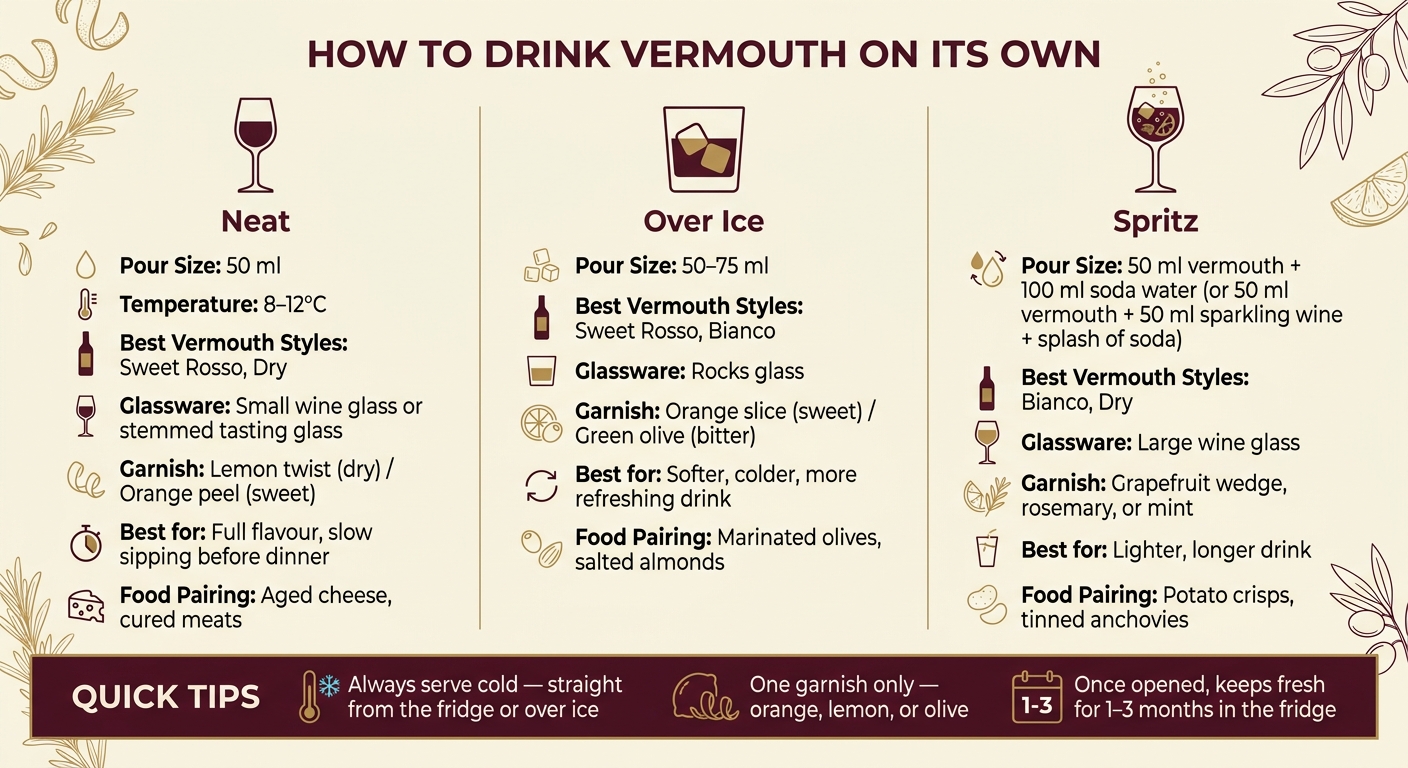
How to Drink Vermouth Neat, Over Ice & as a Spritz
What to know before you pour
Pick the right style for how you want to drink it
The style you choose has a big effect on how vermouth drinks by itself. Sweet rosso is the easiest place to start: rich, spiced and smooth. Bianco is lighter, with floral notes and vanilla, and it pairs well with soda or tonic. Dry vermouth is crisp and herbal, and it’s best served cold with lemon.
Serve it cold and store it in the fridge
Vermouth is wine-based, so once you’ve opened the bottle, it starts to oxidise and should go straight into the fridge. Serve it straight from the fridge or over ice so it stays bright and balanced.
After opening, and if kept chilled, vermouth should stay fresh for one to three months. Dry styles usually lose their edge sooner than sweet ones.
Keep glassware simple and garnish to one thing
You don’t need anything fancy here. Just use a glass that gives the aroma some room. A small wine glass or stemmed tasting glass works well for neat serves, a rocks glass suits vermouth over ice, and a large wine glass is a good fit for a spritz.
| Serve | Glassware | Garnish |
|---|---|---|
| Neat | Small wine glass or stemmed tasting glass | Lemon twist (dry) or orange peel (sweet) |
| Over ice | Rocks glass | Orange slice (sweet) or green olive (bitter styles) |
| Spritz | Large wine glass | Grapefruit wedge, rosemary, or mint |
Stick to one garnish. That usually does the job best: orange for rosso, lemon for dry, and olive for bitter styles.
With the basics in place, the next step is deciding whether to drink vermouth neat or over ice.
You're Doing It All Wrong - How To Make A Vermouth Spritz
How to serve vermouth neat and over ice
Once the bottle is chilled, the next choice is simple: drink it straight, or pour it over ice.
Neat: the clearest way to taste vermouth
A neat serve lets you taste the balance the maker had in mind. Pour about 50 ml into a small chilled glass. Add orange peel with sweet vermouth, a lemon twist with dry styles, or a green olive with bitter ones.
Take small sips and give it a moment. Vermouth tends to open up as it sits in the glass.
Best for slow, quiet sipping before dinner.
If you’d like those same flavours with a gentler edge, serve it over ice instead.
Over ice: colder and softer
Fill a rocks glass with fresh ice, then pour 50–75 ml over it. Stir gently for a few seconds. Ice softens bitterness and rounds sweetness. Express a citrus peel over the glass, then drop it in.
How to choose between neat and over ice
- Neat: full flavour, best for tasting
- Over ice: colder, softer, more refreshing
- Both: start with a cold bottle and one garnish
If you want a longer, lighter serve, the next step is a spritz.
How to make a vermouth spritz at home
If you want a longer drink, turn your vermouth into a spritz.
Two spritz ratios in ml you can use straight away
The easiest serve is 50 ml of vermouth topped with 100 ml of chilled soda water. It’s light, crisp and low in alcohol.
If you want a bit more body, go with 50 ml of vermouth with 50 ml of sparkling wine (Prosecco or English sparkling wine both work) plus a small splash of soda water.
Step-by-step spritz method and garnish pairings
Once you’ve picked your ratio, build the drink straight in the glass. Fill a large wine glass with plenty of fresh ice, pour in the vermouth, then add the soda water or sparkling wine. Stir once to combine.
Cold ingredients make a big difference here. If the vermouth, soda and sparkling wine are all fridge-cold, the drink stays sharper for longer and the ice melts more slowly.
For garnish, pair the finish with the vermouth style:
- Lemon twist for dry vermouth
- Orange peel for sweeter styles to lift the orange notes
- Green olive for bitter styles
With any citrus peel, give it a squeeze over the glass first so the oils hit the top of the drink, then drop it in.
Spritz serve ideas using Asterley Bros vermouth

Two easy serves work well here. SCHOFIELD'S English dry vermouth with soda water and a lemon twist makes a crisp, floral aperitif that suits daytime drinking.
For an evening serve, ESTATE English sweet vermouth with sparkling wine and an orange peel gives you a rounder, richer drink with a warmer feel.
Which serve suits your taste and the occasion
Match the serve to what you want and when you are drinking
Once you know the three serves, the next step is simple: pick the one that suits the moment.
Choose your serve based on intensity, temperature, and length: neat for depth, over ice for balance, and spritz for length.
| Serve | Best for | Food pairing |
|---|---|---|
| Neat | Most expressive neat serve | Aged cheese, cured meats |
| Over ice | A chilled aperitivo | Marinated olives, salted almonds |
| Spritz | A longer aperitivo | Potato crisps, tinned anchovies |
Think of that as your final filter before you choose a garnish and snack.
Before dinner, dry vermouth tends to work best over ice or as a spritz. It keeps things crisp and easy-going. For slower evening sipping, sweet vermouth is often best neat or over ice for a richer, spiced serve.
Conclusion: start cold, keep it simple, and adjust from there
Vermouth drinks well on its own when the serve stays simple. The main things to get right are temperature, one garnish, and the style that fits the moment.
Start cold, keep the garnish to one thing, and match the serve to the moment.
FAQs
How do I know if opened vermouth has gone off?
Opened vermouth starts to oxidise bit by bit once the bottle is open, so the flavour and colour fade over time, much like regular wine.
Keep it in the fridge to help it stay in good shape. It will often last anywhere from four weeks to three months, depending on the product, though it’s at its best when enjoyed sooner rather than later after opening.
Should I serve vermouth from the freezer or just the fridge?
Keep vermouth in the fridge, not the freezer. It’s a fortified wine, so once opened it can oxidise. Cold storage helps it hold onto its freshness and flavour for longer.
Vermouth is best served chilled, usually at around 12°C to 16°C, depending on the style. A fridge will get it into that range. If it still isn’t cold enough when you’re ready to pour, chill the glass first.
Which vermouth style is best for beginners?
For beginners, a sweet vermouth is often the easiest place to start: rich, spiced and rounded. Our pick is ESTATE, an English sweet vermouth that is lower in sugar than many sweet vermouths and works neat, over ice or topped with soda.
If you'd like something lighter, try a floral style such as our ROSÉ VERMOUTH, or a bianco vermouth, which sits between dry and sweet styles with a softer profile built around floral and citrus notes.