



The global rise of aperitivo culture is changing how we drink. Low-alcohol and no-alcohol options are gaining traction, with double-digit growth in 2024 across major markets. This shift highlights a preference for flavour, craftsmanship, and moderation over high alcohol content.
Key trends include:
- Small-format cocktails: Mini martinis and tasting menus are becoming popular, offering smaller portions with bold flavours.
- Botanical spirits innovation: Vermouth and amari lead the low-ABV movement, with brands using techniques like barrel ageing and cold extraction to create complex, flavourful drinks.
- Changing drinking culture: Bars now pair low-ABV cocktails with meals, blending tradition with modern tastes.
- Consumer engagement: Subscription models, masterclasses, and storytelling help brands connect with drinkers.
Independent brands are seizing this opportunity by focusing on quality, flavour, and creative product development. The aperitivo trend aligns with a growing desire for social, flavourful, and lighter drinking experiences.
The Bitter Giuseppe - low ABV never tasted THIS good
The Rise of Small-Format Cocktails and Tasting Menus
As people lean towards lighter and more intentional drinking habits, small-format cocktails and tasting menus are changing how we enjoy aperitivo moments.
Mini Martinis and Smaller Serves
What was once a bartender’s secret has now become a popular menu feature: miniature cocktails. Across bars in both the UK and the US, these smaller serves (usually 60–90ml, or about half the size of a traditional martini) are crafted for just 3–4 sips.
Take Rita’s in London, for example. Back in 2021, Missy Flynn, the co-owner, introduced a three-ounce mini martini garnished with a jalapeño and anchovy-stuffed gilda. At £9, it’s a more affordable treat compared to their standard cocktails priced at £13.50–£14.50. Flynn described it as a "mini luxury moment", and it quickly became a customer favourite.
Similarly, Tayēr + Elementary in London, often featured on the World's 50 Best list, has been serving the "One Sip Martini" (OSP) since 2019. This blue-cheese-infused cocktail has become so popular that, as of late 2024, representatives noted, “there is literally no table that wouldn’t order them.” The success of the OSP has inspired creativity in other venues too. Over in New York City, Bar Valentina’s "$10 Teeny 'Tinis" have also gained traction since 2023. Representatives at the bar noted how well the format works as an approachable aperitif.
These smaller cocktails come with practical perks too. Tristan Brunel, bar director at New York City's Tusk Bar, pairs mini martinis with single dressed oysters. He explains:
The whole time, they're getting the coldest version of the drink in the smallest format.
This clever pairing avoids the issue of the "warm last third" that often plagues full-sized cocktails. The success of these mini drinks has also opened the door for tasting menus, offering a more curated and thoughtful way to enjoy cocktails.
Tasting Menus and Drink Pairings
Tasting menus, with their curated flights, allow guests to explore a variety of flavours without overindulging or overspending. At Dante in New York City, patrons can try flights of three scaled-down versions of their signature Negronis, each pour measuring just two ounces. This approach transforms the experience into a guided journey rather than a single commitment.
In Houston, Lee’s Bar offers a similar concept. Bar director Máté Hartai serves a two-ounce "Appleteeny", a vibrant green cocktail made with vodka, Granny Smith apple juice, and unaged apple brandy, in a frosted mini martini glass. With about 150 small cocktails sold weekly in their 55-seat venue, Hartai explains:
Our goal is to create an inviting atmosphere where every additional serve feels like joining a party.
These small serves act as a gateway for guests exploring the bar’s intricate menu, which is inspired by art and film.
This trend towards smaller portions aligns with broader market movements. In 2023, spirits sales volumes dropped by 5% in the UK and 2% in the US, the first decline in the US in nearly three decades. Additionally, the percentage of US adults aged 18 to 35 who drink alcohol occasionally fell from 72% in 2001–2003 to 62% in 2021–2023. By focusing on quality over quantity, small-format cocktails and tasting menus cater to these shifting preferences, ensuring that cocktail culture remains both social and sensory.
Low-ABV Product Development in Botanical Spirits
With more people leaning towards lighter drinking options, independent spirits brands are crafting botanical-rich recipes to develop low-ABV products that maintain complexity and depth. This trend aligns with the growing demand for aperitivo-style drinks that prioritise flavour and quality. The challenge lies in mimicking the texture and character usually provided by alcohol while preserving intricate flavour profiles. Below, we explore how traditional techniques like those used in vermouth and amari, combined with modern extraction methods, are driving this innovation.
Vermouth and Amari in the Low-ABV Movement
Vermouth and amari have become key players in the low-ABV space, serving as both cocktail ingredients and standalone aperitifs. These aromatised wines, typically between 11% and 17% ABV, rely on wine as a solvent to extract bold botanical flavours. Classic aperitifs highlight the use of bittering agents like gentian root, wormwood, and cinchona bark to deliver the distinctive bitterness that defines aperitivo culture.
This traditional approach is now being reimagined. One no- and low-alcohol producer, for example, has aged a vinegar-based aperitivo base in whisky barrels for three years to add smoky, woody notes, pairing it with classic bittering botanicals such as gentian, wormwood, rosemary and thyme.
This shows how brands are borrowing traditional ageing techniques from the world of spirits to enhance non-alcoholic bases, creating premium products that can rival full-strength spirits in both quality and price. Such methods pave the way for further experimentation in low-ABV flavour development.
Flavour Development Through Experimentation
To achieve the complexity often associated with alcohol, independent producers are exploring new extraction methods and creative ingredient pairings. Since ethanol enhances aroma and creates mouthfeel, brands are turning to layered botanical infusions and tannin-rich ingredients to avoid a "thin" texture in their products. For instance, tannins from pressed cider apples can provide structure in formulations with reduced alcohol content.
Cold extraction is gaining traction as a preferred method, using water-based techniques to preserve delicate aromatics that might otherwise be lost during traditional heat-based distillation. Acidic components like apple cider vinegar and citric acid are also being used to add brightness and a crisp, palate-cleansing quality. This "shrub-style" approach delivers the sharpness consumers expect from aperitivo drinks without relying on ethanol.
The financial benefits of this trend are clear. In the UK, drinks under 3.5% ABV qualify for a lower duty rate, while in the US, sales of no- and low-alcohol products grew by roughly 30% year-over-year in 2022. These experimental techniques position low-ABV spirits as premium offerings that prioritise flavour and craftsmanship over simply reducing alcohol content.
How Independent Spirits Brands Can Adapt
The aperitivo economy is opening up fresh opportunities for independent spirits brands to rethink their approach to products, marketing, and customer engagement. To thrive in this growing market, brands must align themselves with the aperitivo moment: a laid-back, pre-dinner ritual that’s gaining traction worldwide. Here are some ways brands can refine their offerings and strategies to make the most of this trend.
Creating Low-ABV Product Lines
Crafting low-ABV spirits is about delivering complexity and quality, not just cutting alcohol content. Independent brands can emphasise the use of local botanicals and traditional methods to create nuanced flavours that appeal to discerning drinkers. These products can be positioned as premium additions to the market, standing shoulder-to-shoulder with full-strength spirits.
To further enhance their appeal, brands can adopt a signature serve approach, working with bartenders to develop both simple cocktails for home use and sophisticated options for bars. A great example of this is the "Paper Plane" cocktail, created by bartender Sam Ross in 2007, which became a modern classic and raised the profile of the Italian amaro it calls for.
Using Storytelling and Experiential Marketing
Aperitivo marketing thrives on personal engagement and meaningful narratives. By interacting directly with bartenders and consumers, brands can uncover local drinking habits (like the UK's "pub time") and craft stories that resonate with these rituals. It is a long-term game, built on a clear vision, a strategy and close attention to the drinker.
This storytelling approach can be extended through immersive events. Hosting masterclasses and tastings allows brands to educate consumers about their production techniques, botanical choices, and versatile serves. These hands-on experiences often create stronger connections than traditional advertising ever could.
Subscription Services and Membership Programmes
Subscription models provide a smart way for independent brands to secure recurring revenue while building a loyal customer base. Take the Negroni Society from Asterley Bros, for instance. For £14.50 a month plus postage, members receive a new Negroni recipe every month, crafted by the best bars and bartenders, with two Negronis in each delivery.
This kind of offering not only encourages customers to explore different products but also taps into the growing trend of moderated drinking.
Case Study: The Asterley Bros Aperitivo Approach
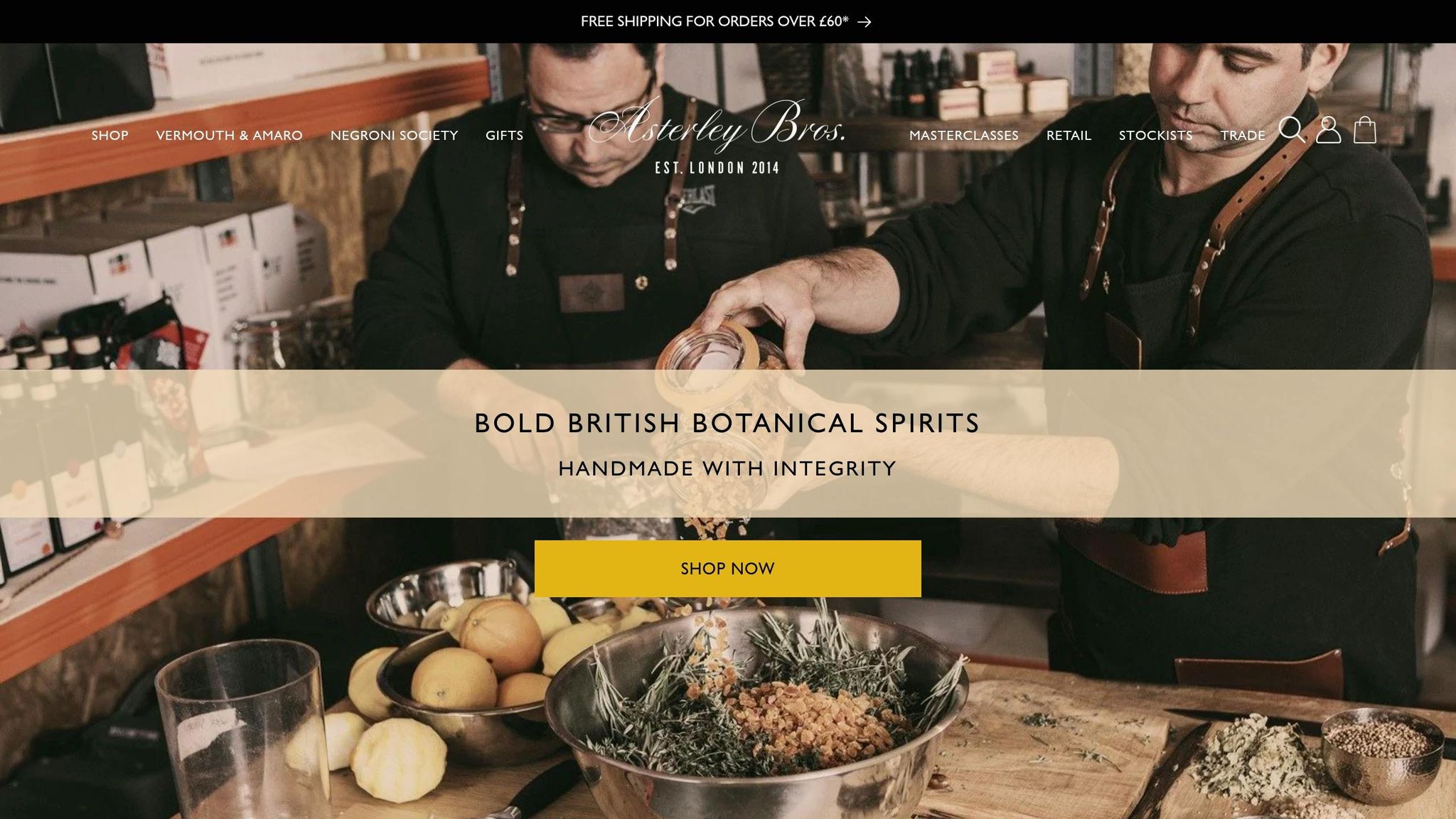
English Vermouth, Amaro, and Aperitivo Products
Asterley Bros, a South London maker and blender founded by brothers Rob and Jim Berry in 2014, specialises in vermouth, amaro and aperitivo with a British twist. Their range includes ESTATE sweet vermouth, BRITANNICA London fernet and ASTERLEY ORIGINAL British aperitivo, all designed to complement the aperitivo moment.
ESTATE English sweet vermouth (£26.95 for 500ml, 16% ABV) is built on English Pinot Noir from Gusbourne in Kent, with 34 botanicals including English hops, wormwood, orange and wild cherry bark. It is Italian rosso in style but lower in sugar than many sweet vermouths, ideal for a Negroni or served over ice with an orange twist, and it won Silver at the World Vermouth Awards 2021 and 2 stars at Great Taste 2026. BRITANNICA (£38.95 for 500ml, 40% ABV), the only British-made fernet, washes London Porter through botanicals such as cacao nibs, myrrh, mint and cinchona. Meanwhile, ASTERLEY ORIGINAL (£20.95 for 500ml), a British red-bitter aperitivo at 12% ABV, brings bitter orange, rhubarb root and rosemary to spritzes and light cocktails.
Asterley Bros doesn’t stop at product innovation; they also engage directly with consumers to enhance the aperitivo experience.
The Negroni Society and Vermouth Masterclasses
Asterley Bros takes consumer engagement to the next level with initiatives like the Negroni Society and Vermouth Masterclasses, which bring their products to life.
The Negroni Society is their members' club: each month brings a new Negroni recipe, crafted by the best bars and bartenders, and deliveries go out on the 10th by Royal Mail, with a membership card in the first one. Members can cancel any time, and 6- and 12-month plans save 5% and 10%.
The Vermouth Masterclasses run at their production space in South London (SE26). Welcome to Vermouth takes place on Thursday evenings and Saturday afternoons: for £59.50, guests taste the full range, enjoy aperitivo cocktails and nibbles, go behind the scenes and take home a bottle of English vermouth (RRP £26.95). Two further classes, The Negroni Session and Introduction to Amaro, each last two hours and send guests home with a bottle of ASTERLEY ORIGINAL.
Through these hands-on experiences, Asterley Bros effectively builds brand loyalty while introducing consumers to the versatility of botanical, low-ABV spirits.
Practical Steps for Market Alignment
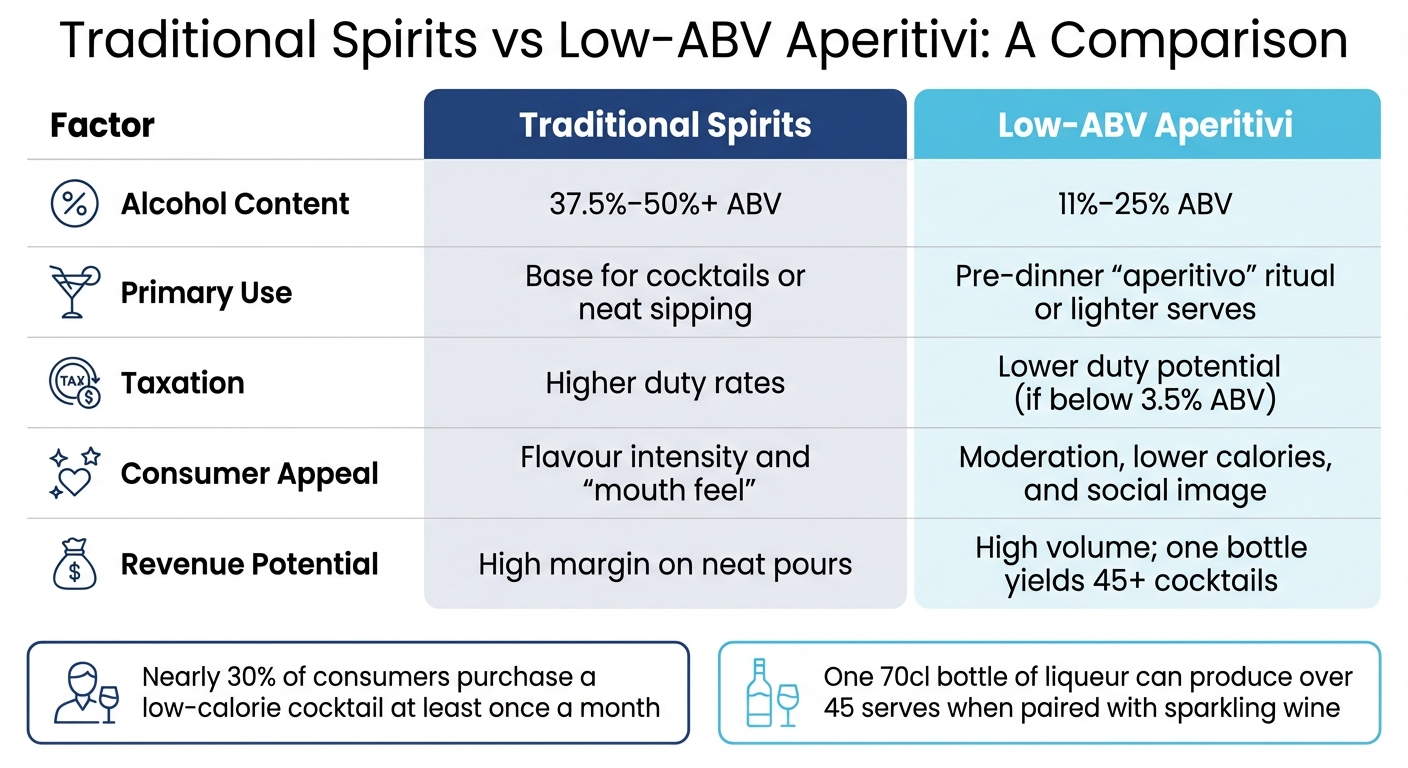
Traditional Spirits vs Low-ABV Aperitivi: Key Differences in Alcohol Content, Use, and Market Appeal
Pricing and Value Proposition
Independent spirits brands must carefully price low-ABV products while showcasing their handcrafted qualities. A commonly used four-tier classification provides a helpful guide: Value (under £15), Premium (£15–£35), High-End Premium (£35–£75), and Super-Premium (£75+). For instance, the big Italian aperitivo brands fit within the Premium tier, whereas more specialist herbal liqueurs and amari often justify higher pricing by highlighting their botanical depth and precise production techniques.
The secret lies in enhancing perceived value through craftsmanship. Brands can achieve this by spotlighting artisanal processes, selective botanical sourcing, and heritage, even with reduced alcohol content. For example, promoting the use of fresh mountain herbs or cold infusion methods instead of cheaper alcohol-soluble extracts can support higher price points. In the UK, producing spirits under 3.5% ABV offers a cost-saving advantage due to lower duty rates, making it a smart financial strategy.
Beyond pricing strategies, engaging consumers directly through masterclasses and tastings can further reinforce the premium nature of these products.
Hosting Masterclasses and Tastings
Educational events are an excellent way to build on a product's value proposition, especially when addressing the sensory differences in low-ABV spirits. Tim Lightbourne, Co-founder of Invivo, explains:
Alcohol provides flavour and mouthfeel, so with less alcohol, the wine experience can often be lacking.
Through masterclasses, consumers can learn how botanical spirits deliver depth and satisfaction without relying on high alcohol levels. These events also tap into the visually driven cocktail culture, showing attendees how to create premium low-ABV drinks that look and taste exceptional.
Interestingly, nearly 50% of consumers enjoy a cocktail before a meal. Hosting masterclasses focused on pre-dinner occasions can highlight product versatility. For example, a single 70cl bottle of liqueur can produce over 45 serves when paired with sparkling wine. Demonstrating how to prepare lighter, pre-dinner drinks with the same attention to detail as classic cocktails ensures these offerings maintain their appeal.
Traditional Spirits vs Low-ABV Aperitivi: A Comparison
A direct comparison between traditional spirits and low-ABV aperitivi underscores the unique positioning of each within the market.
| Factor | Traditional Spirits | Low-ABV Aperitivi |
|---|---|---|
| Alcohol Content | 37.5%–50%+ ABV | 11%–25% ABV |
| Primary Use | Base for cocktails or neat sipping | Pre-dinner "aperitivo" ritual or lighter serves |
| Taxation | Higher duty rates | Lower duty potential (if below 3.5% ABV) |
| Consumer Appeal | Flavour intensity and "mouth feel" | Moderation, lower calories, and social image |
| Revenue Potential | High margin on neat pours | High volume; one bottle yields 45+ cocktails |
This comparison reveals how traditional spirits cater to consumers seeking bold flavours and indulgence, while low-ABV aperitivi align with trends favouring moderation and lower-calorie options. With nearly 30% of consumers purchasing a low-calorie cocktail at least once a month, low-ABV options present a strong opportunity for brands to meet evolving preferences.
Conclusion
The aperitivo market is set to become a £24.6 billion global industry by 2034, with Europe leading the way, holding 42.3% of the market, valued at around £6.3 billion. For independent spirits brands, the task is not just about reducing alcohol content; it’s about embracing a market that prioritises pleasure, flavour, and craftsmanship.
Brands that focus on the quality of their drinks and the complexity of their botanicals are the ones most likely to succeed, which matters when 70–80% of newer brands are predicted to fail. The drinks that last are the ones people choose because they taste good, not because they contain less alcohol.
Building trust through storytelling and engaging experiences like masterclasses strengthens a brand’s image. Endorsements from chefs, sommeliers, and food critics help justify premium pricing and foster customer loyalty. This dedication to quality and the overall drinking experience is shaping the future of cocktail culture.
Consumers are shifting their focus to the occasion and the quality of the drink rather than its alcohol content. With 95% of botanical spirit drinkers still consuming alcohol, there’s a clear chance to offer sophisticated, bitter, and astringent flavours that cater to a more refined palate. When the alternative is a soft drink, the cocktail has to earn its place with flavour and complexity, or people won't order it again.
FAQs
What counts as low‑ABV in aperitivo drinks?
Low-ABV in aperitivo drinks generally means beverages with an alcohol by volume (ABV) ranging from 15% to 22%. This is less than what you'd find in standard spirits and fits neatly with the rising trend of mindful drinking, as well as the shift towards lighter, more session-friendly choices.
Why are mini cocktails so popular right now?
Mini cocktails are gaining popularity as more people embrace mindful drinking and prioritise quality over quantity. This trend is particularly evident among Gen Z, who are leaning towards lower-alcohol options served in smaller portions. These drinks deliver full flavour without the risk of overindulgence. Low-ABV beverages like vermouth, celebrated for their botanical depth, fit seamlessly into this movement. They also reflect the aperitivo culture, which values moderation and sociable moments. Stylish and packed with flavour, these mini serves are perfectly in tune with today’s changing drinking habits.
How can indie spirits brands make low‑ABV drinks taste full‑bodied?
To craft rich, low-ABV drinks, independent spirits brands can focus on boosting botanical depth. Incorporating herbs, spices, and bitter elements like wormwood can create layered flavours. Fine-tuning ingredient ratios and employing techniques such as gentle dilution and chilling help retain complexity. Using seasonal and locally sourced ingredients brings a burst of natural flavour and freshness, making the drinks more vibrant. These approaches ensure low-ABV options stay flavourful and satisfying without the need for a higher alcohol content.